by vicky | 31 Mar 2020 | blog
Social distancing scatters our quartet but brings on a little violin and viola duet. And if that’s not enough there’s a very cute puppy at the end. Prelude No 17 from 48 Preludes and Fugues by JS Bach. Arranged by Friedrich Hermann. Lindsay Braga-violin Andrew Gillett-...
by Andrew Gillett | 31 Mar 2020 | blog
In the current situation that we find ourselves in, where life has largely been put on hold, apart from the valiant key workers who are tirelessly and admirably going about their work, it seems apt to consider the significance of rests and pauses, using music as a starting point. I have touched on the subject of rests in music briefly before in a previous post but I have found myself recently reflecting more extensively on the subject in the light of our enforced break. Firstly: isn’t lace wonderful! Here’s an example of Honiton lace that has a decidedly spring-like burst of life about it: Sample of Honiton Lace circa 1870 from the Allhallows Museum Collection (www.honitonmuseum.co.uk) Photo copyright The Allhallows Museum. Lace provides a perfect illustration of the importance of rests in music. The needlework represents the notes and the spaces between imply the rests. They co-exist; without the spaces there would be no meaning. (I find that many of my pupils are rather baffled by this concept – that rests are so important and meaningful. In their minds, music is about making sound.) It’s often not clear to the listener what a profusion of rests exists in the music they are hearing. Often, a player will have a rest when someone else is playing, so the rest is not so noticeable. A good example of the importance of rests in music is the end of Haydn’s string quartet Op 33 No 2 (‘The Joke’), where his use of rests sets up the ‘punchline’ at the very end of the last movement. We played this quartet in a concert...
by Andrew Gillett | 22 Feb 2020 | blog
It was sad to hear of the recent death of Nicholas Parsons, the genial presenter of Radio 4’s popular comedy programme Just a Minute. “Without hesitation, repetition or deviation” has become a catchphrase used in common parlance. It is something that any musician who presumes to stand up and talk about the music about to be played would be wise to bear in mind. As audiences may have noted, I am still very much a learner in this respect. I’d only last a few seconds on that programme. Turning the rules upside down to make hesitation, repetition and deviation permissible in a musical context, some thoughts have struck me in relation to the works that we are playing in our current concert series. Hesitation I suppose the most obvious musical manifestation of hesitation is the pause, indicated by the composer in the printed music by what could be described as a dot with a sideways bracket above it, looking a bit like an all-knowing eye and eyebrow. There isn’t a single pause in Mozart K 421. There are several in the Webern Bagatelles – momentary lulls in the intense abundance of textures and expressions. There are a few more in Beethoven’s Op 59 No 1. He was an inveterate pause man, even more than your most avid dog or cat lover. His most famous work (arguably), his 5th symphony, has two pauses in close succession at the beginning of the piece. Sometimes the pause is used like this for dramatic effect. At other times it marks an important place in the structure of the music where it is time...
by Andrew Gillett | 30 Jan 2020 | blog
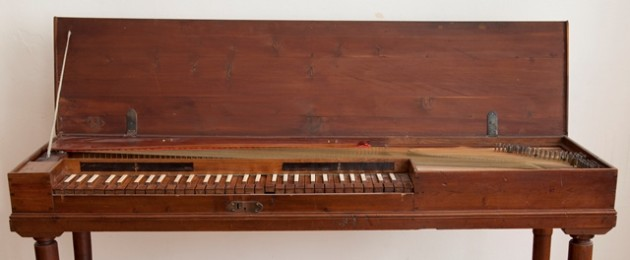
There is an indication at the beginning of Mozart’s K. 421 for the performers to play ‘sotto voce’ – under the voice or hushed. I like to think of Mozart hunched over his clavichord – the softest and most subtle of keyboard instruments – composing such music. D minor is the key of K. 421; the same key as his Requiem. This quartet is a beautifully balanced work. Despite the D minor basis, there is as much lightness as melancholy because of Mozart’s use of different keys. Why do composers choose particular keys for the pieces they are composing? Sometimes it is for practical reasons based on the combinations of instruments in the ensemble. Generally it seems a more intuitive choice. It is possible that for some composers it is linked to synaesthesia – the way sounds evince certain colours in the mind of the listener, the colours relating to feelings and moods. For performers, all keys have a particular physical sensation in the hand so the sensation of playing in a certain key is decidedly visceral. The choice of key by the composer becomes a physical experience for the performer and in live performance this is arguably partly transmitted to listeners. We all feel the key, its colour and character. We love playing this piece. It always feeds the...
by Andrew Gillett | 29 Jan 2020 | blog
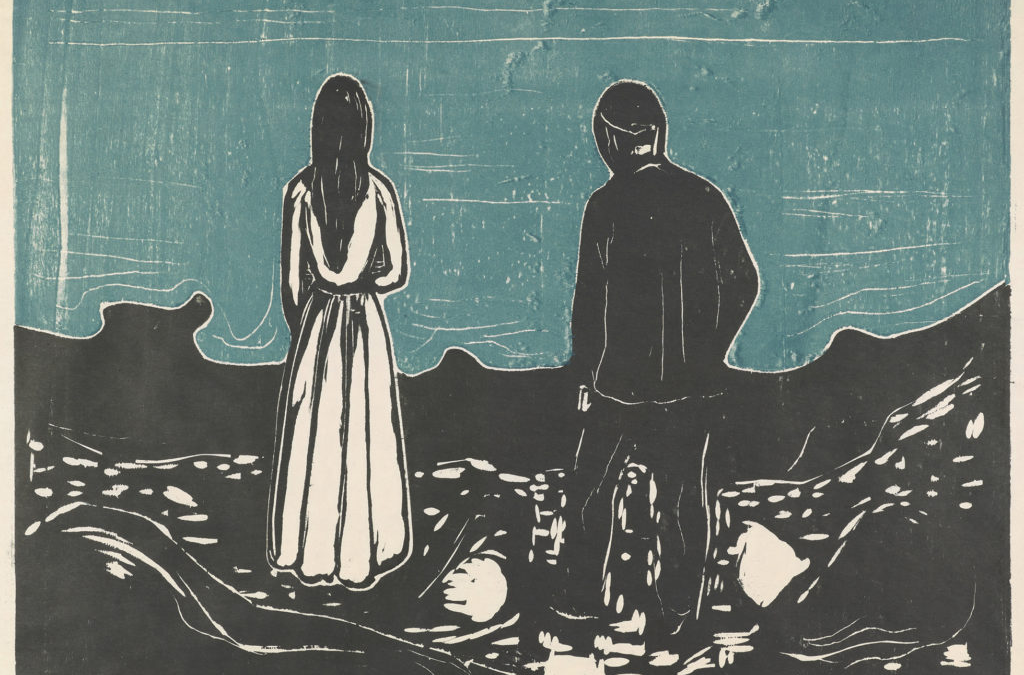
I was approached in the interval of our first concert of our current concert series by a delegation of three rather ernest ladies who wanted to know what Webern is trying to say in the Six Bagatelles Op. 9 – what the music might mean. I am not sure why they thought that I might have actually had an answer to that question. It was an understandable question, because it is music so utterly unlike the Mozart quartet that we play at the start of our programme. One might ask then: what is Mozart trying to say? Who knows?! Yes, there is a narrative, of ideas, crises and resolution but what he is actually saying is elusive because it inhabits moods and feelings without the use of words, and therein lies its particular effectiveness. The Bagatelles are extremely short. In all they last about four minutes. Their brevity is quite startling, and a significant aspect of the experience of hearing them. I think that it is partly because what takes place in that short time is so eventful and detailed – they are particularly tricky pieces to play – and there is hardly time to assimilate what you’re hearing because they are over in a flash. In a way they are like small pictures, or displays of dried flowers or rocks, that require huge concentration to take in every minute detail of their character. I don’t know what this music means but it is possible to say that Webern is expressing two things at least. Firstly, he is exploring the wonder of sound, which for him includes dissonance as...
by Andrew Gillett | 17 Jan 2020 | blog
Andrew writes… ‘Beethoven Unleashed’ (BBC Radio 3’s title for their year-long Beethoven fest to mark the 250th anniversary of his birth) is now under way. This morning in ‘This Week’s Composer’ I heard a broadcast of the ‘Grosse Fuge’ for string quartet, Op 133. Talk about unleashed! It almost made me forget my need for lunch. This is music of a determined striving, emotionally and intellectually. It doesn’t steal upon you like, say, Schubert’s music or Mozart’s; it wrests your consciousness away from mundane matters and into its obsessive-compulsive vortex. You have to listen whether you want to or not. It has made me think what a silly title ‘Beethoven Unleashed’ is. Neither Beethoven nor his music were ever leashed, from beginning to end. Beethoven’s 9th must be some of the most unleashed music ever written (along with Berlioz’s Symphonie Fantastique, Stravinsky’s Rite of Spring, the jazz of Thelonius Monk, and others) – it just needs some unleashed musicians to make it pounce live off the score. I guess this is what the Unleashed title is saying. At the very beginning of Op 59 No 1, which we are rehearsing in readiness for our concert series, the cello is certainly unleashed, being given a delightful flowing solo to launch the music on its way. The musicians who first played this work thought the idea of giving the cello such prominence at the beginning was barmy and it caused considerable consternation – even hilarity. To us now it feels like a gift, as does so much fine music. There are curious passages in Op 59 No 1...

Recent Comments