
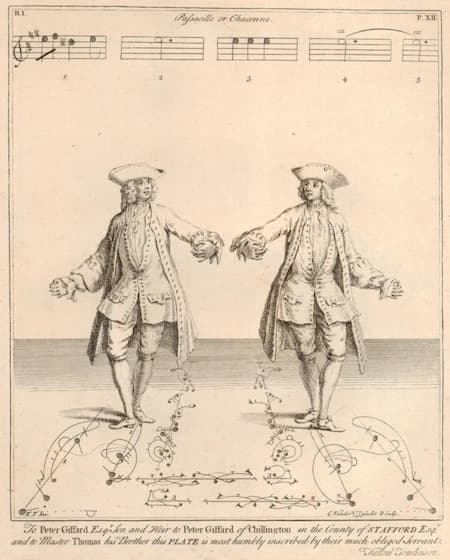
Tomlinson: The Art of Dancing Explained. The Passacille or Chaconne, plate 12, 1735
Wandering minstrels, or more specifically wandering violinists, form the thread that weaves its way through the works that we are playing by Rameau, Kreisler and Schumann.
Very little is known about Jean-Philippe Rameau’s early years but we do know that he was born in Dijon in 1683, and worked as a violinist in travelling companies before moving to Paris, then returned to Dijon as organist of the main church there. Maybe he had been missing the mustard.
He then took up similar posts in Lyon and Clermont-Ferrand before returning to Paris in 1722. It was at Clermont-Ferrand that he wrote his ground breaking Treatise on Harmony, which became the principle text book on musical theory in Europe for many many years. He took a scientific approach, informed by an understanding of nature’s patterns. (Debussy was the main rebel who parted from Rameau’s principles in the late 1800s, ushering in a new age.)
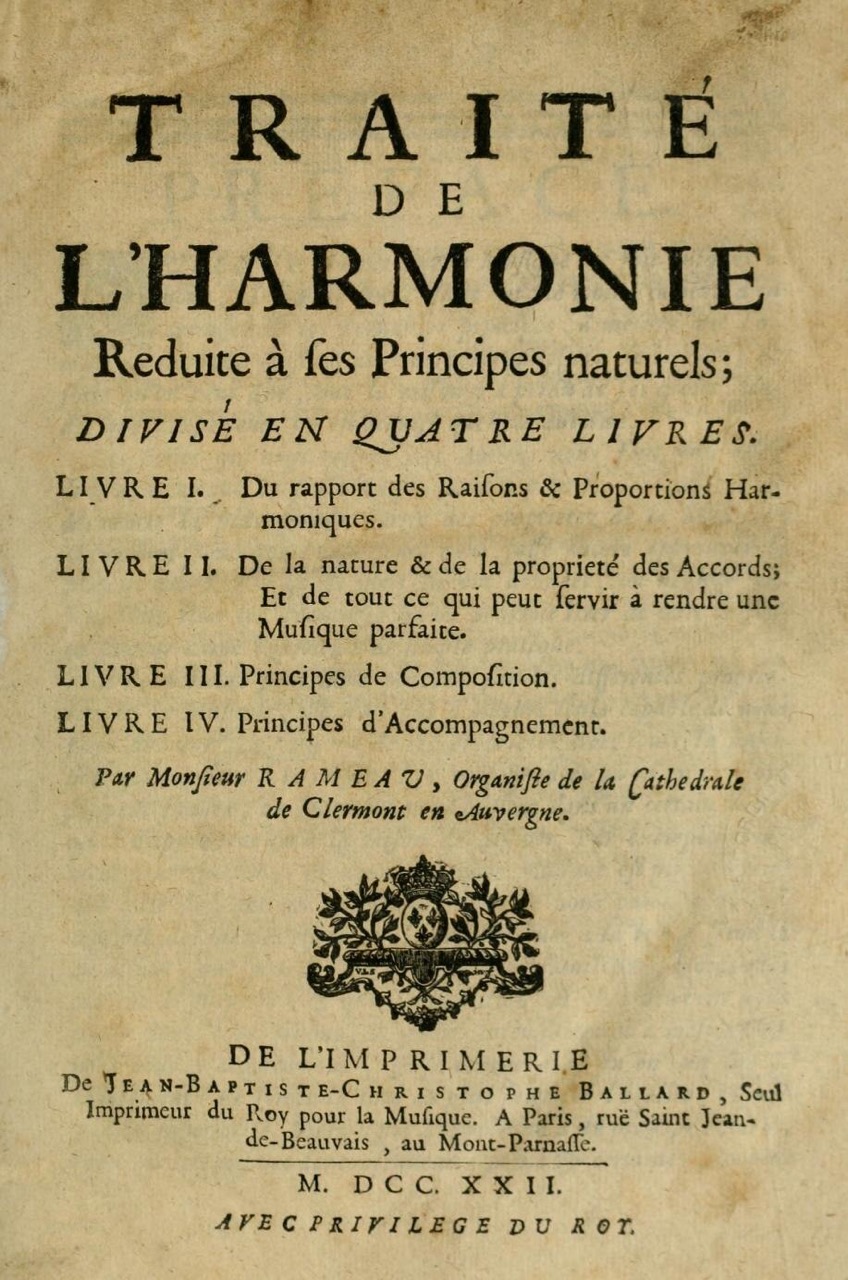
Rameau’s Treatise on Harmony, 1722
Despite his didactic leanings and his reputation throughout Europe as “The Isaac Newton of Music”, he wasn’t a fluent speaker and his handwriting was difficult to read. (He had been taught how to play harpsichord before learning to read or write.) But his music says it all. For him, the primary purpose of music was to express, please the ear and move the passions and he certainly knew how to convey all of this.
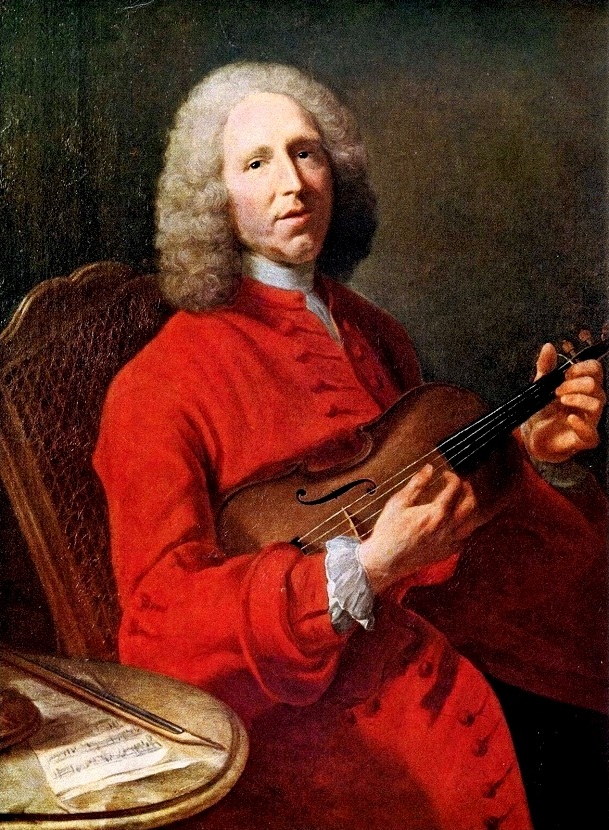
Jean-Philippe Rameau, by Jacques Aved, 1728
It is not surprising that Rameau threw himself avidly into the world of baroque opera and it is operas that he is principally known for. Castor and Pollux – yes, an opera, not a Victorian remedy for indigestion – was first performed in 1737. The opera culminates in a “Festival of the Universe” in which stars, planets and sun celebrate the twin brothers being received into the Zodiac as the constellation of Gemini. The Chaconne that we are playing (in a very effective arrangement for string quartet by the Dudok Quartet) is part of the music accompanying the dancing in this celebration.
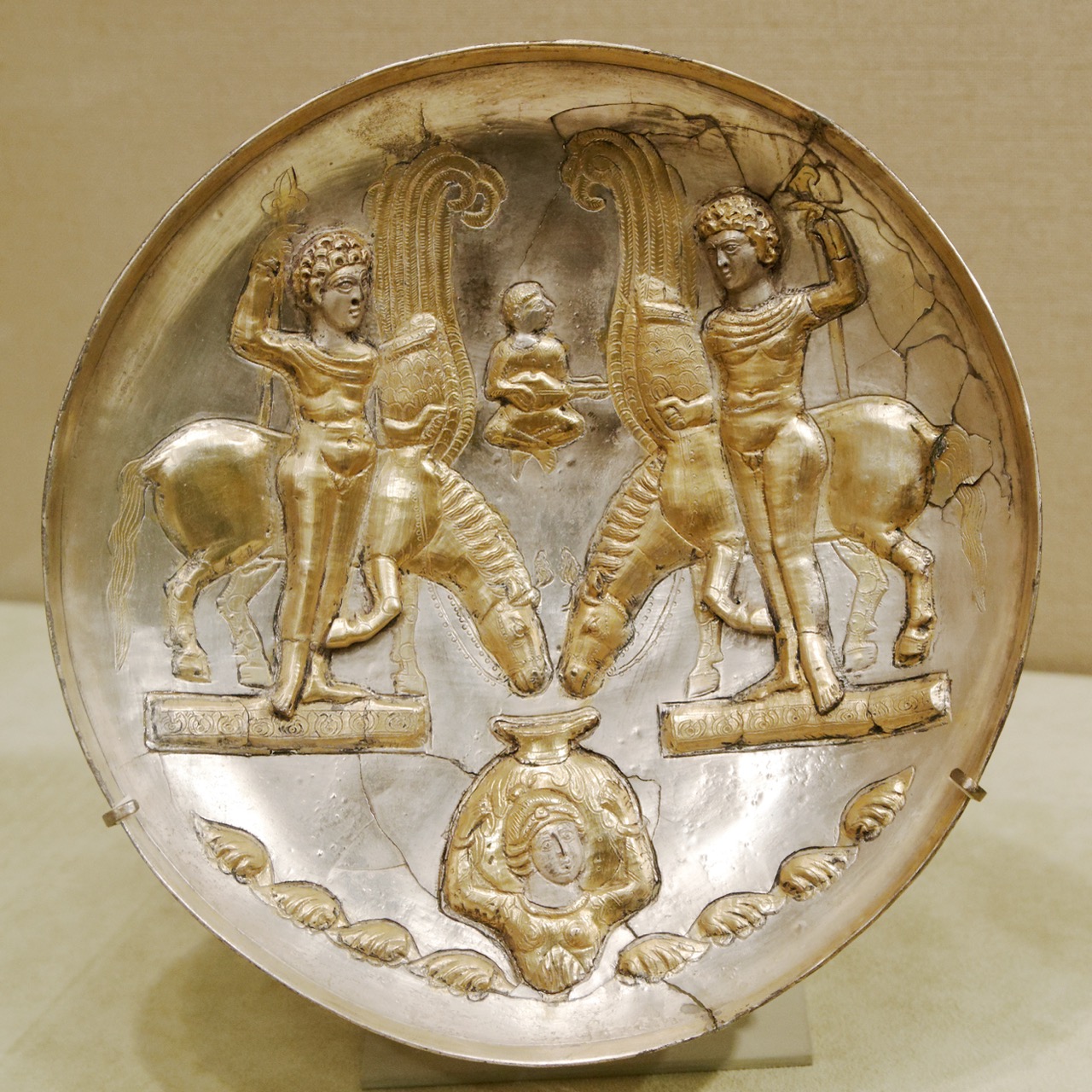
Plate with youths and winged horses, Sassanian artwork after the Graeco-Roman iconography of the Dioscuri, 5th-6th century
The Chaconne, originally a song and dance form that originated in South America made up of a repeated bass line pattern around which there was variation and embellishment, became a popular dance in the baroque era. In operas it was often placed in the finale, as a counterbalance to the overture. As with all baroque dance, it was pretty complex. Fortunately this illustration from Rameau’s time gives us a few pointers as to how to successfully negotiate its intricacies.
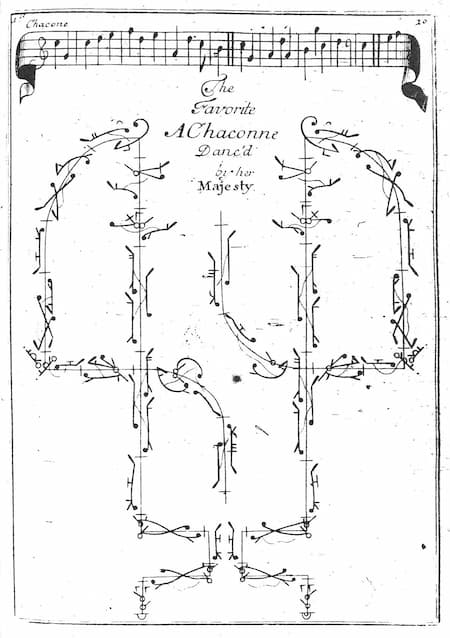
How to dance a chaconne. From A Collection of Ball-Dances performed at the Court. Mr Isaac’s ‘The Favorite 1706
Fritz Kreisler, the most famous violinist of the early 1900s, was one of the celebrated troubador musicians of the time, like other musical stars such as Toscanini and Paderewski, who did a huge amount of travelling across the Atlantic in ocean liners, heading for concert tours in America, Europe and further overseas.
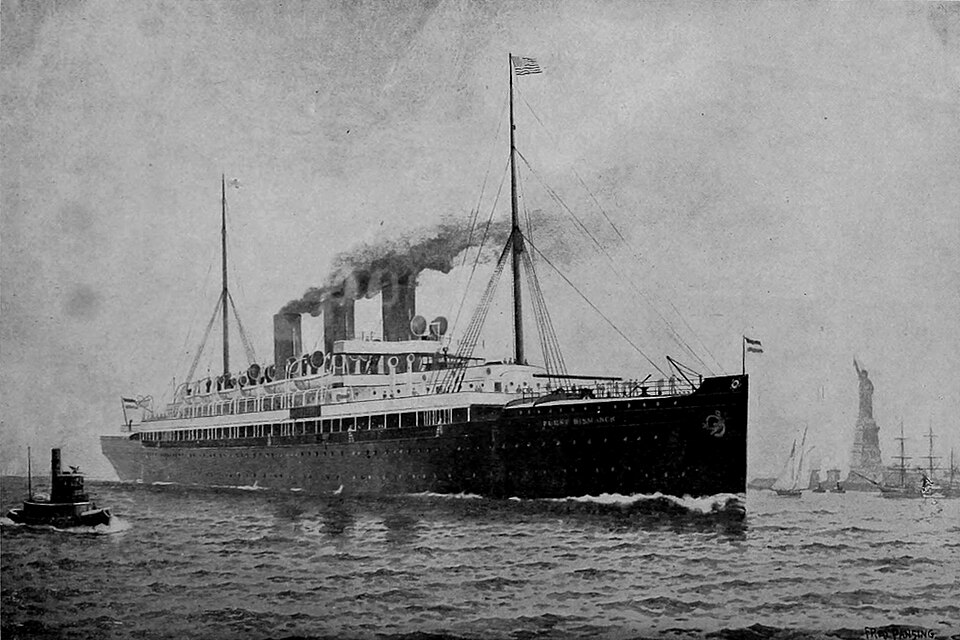
SS Prince Bismarck
It was on one of these trips, in 1901, on board the S.S. Prince Bismarck (the ship that Tchaikovsky had sailed on when he returned to Russia after his only trip to America in 1891) that Kreisler had a life changing encounter in the ship’s barbershop, which also sold knick-knacks and women’s hats.
Kreisler recalled: “As I got up from the barber’s chair, I saw the reflection of a beautiful red headed American girl in that mirror. I fell in love with her instantly for she smiled at me then and there; and I smiled back. That was the beginning and the end for me. . . . We became engaged on that voyage and were married a year later in New York City, and afterward again by the Austrian ambassador in London, and our double marriage took.” (It actually turned out to be a triple marriage. For rather complicated reasons linked with Harriet’s status as a divorcee, they eventually got married in the Catholic Church, as was their wish, in 1947, after her ex-husband had died.)
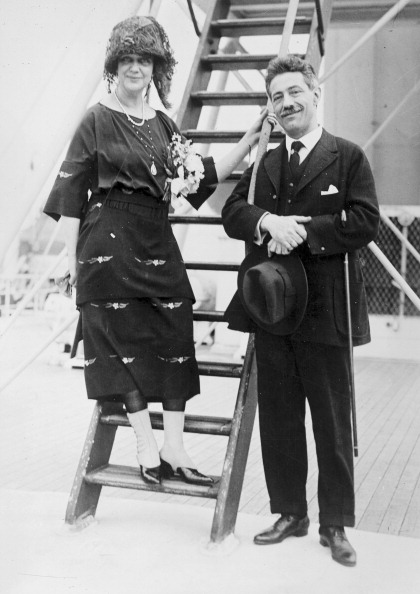
Harriet and Fritz Kreisler
When, in July 1914, the call came to serve in the Austrian Army, Fritz and Harriet (though she was an American citizen) did not hesitate to join up. “It has made me angry sometimes when people have said, ‘How could they take an artist and let him fight?’ They should rather not think it worthy of any comment. I am an Austrian. As soon as war began, the last thing I thought of was a violin or that I had ever played one. Why should I claim immunity as an artist?” Fritz headed off to the battle front while Harriet served in the Red Cross.
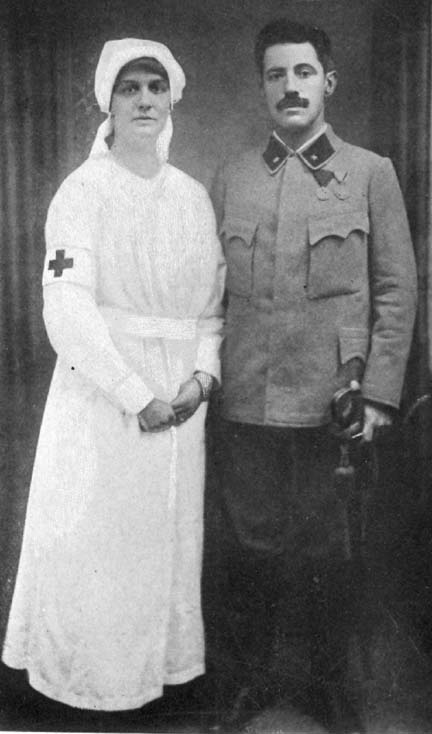
He fought in dire circumstances against the Russians in Poland and after a particularly close encounter with Cossack cavalry, when he was trampled on and impaled by a bayonet, he lay injured in a trench for seven hours before being picked up by a medical orderly. Following this he was exempted from further service. Harriet and Fritz moved to New York and embarked on a concert tour, even though he was still “limping and leaning on a cane.” However, anti-German feelings were running high and the continuation of the tour was considered too provocative so it was cancelled.
Kreisler eventually re-emerged as a top violinist some years later, no doubt aided by the advent of recording technology, which meant his fame spread like wildfire.
Harriet and Fritz remained totally devoted and besotted with each other for the rest of their lives. “She is a very remarkable woman with a fine brain and uncanny intuition. She is a self-sufficient person and in that respect, has what I lack. I needed her and she has made the way easier for me all these years, for she has looked after me in a natural every day way. When I say such things about her, she says, “That’s right, Pop!” She calls me Pop or Fritzi, and I like it.”
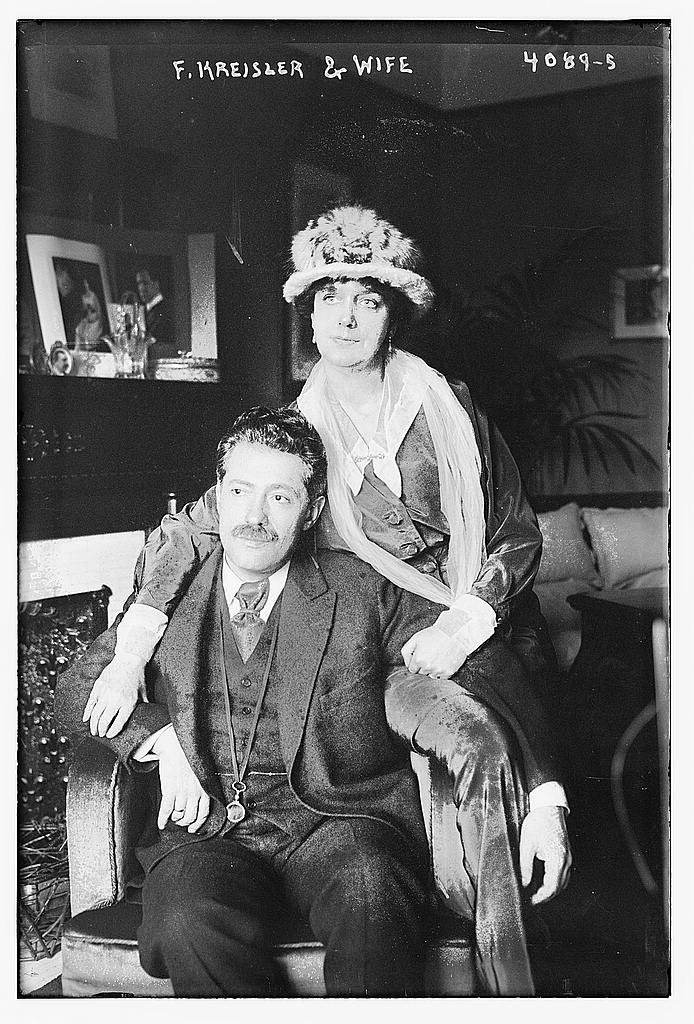
It is not surprising therefore that Fritz dedicated his string quartet to Harriet. Written just after the Great War, in 1919, it is very far removed from the short and relatively light solo pieces that he wrote as encores for his violin recitals. He was an extremely accomplished composer and pianist as well as being a superlative violinist. In the quartet he allowed himself to fully indulge his creative and technical skills. It is a work deeply evocative of the Vienna of his childhood; decadent, charming, but with a sense of being on the cusp of huge change and uncertainty.
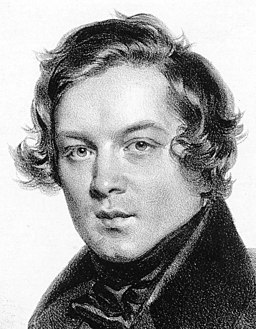
Robert Schumann by Joseph Kriehuber 1839
“All my life I have regarded vocal music as inferior to instrumental music, and have never considered it great art.” This is perhaps a surprising statement by Robert Schumann, pronounced before his frenzied ‘year of song’, 1840 (also the year of his marriage to Clara Wieck), when he wrote countless vocal masterpieces.
Two years later, and alone in Leipzig while Clara was away on a concert tour, Robert said that he was having “quartet-ish thoughts”. (One wonders how romantic Clara found this window into his mind.) He embarked on a study of the quartets of Mozart and Beethoven. On Clara’s return he started work writing three string quartets.
He was a literary man almost as much as a composer and it is clear from his song settings how much the written word sparked his imagination. There is no doubt that elements of his song writing found their way into his instrumental music. In his third quartet he quotes directly from his setting of a poem by Joseph von Eichendorff, Auf einer Burg, part of the Liederkreis Op 39 song cycle.
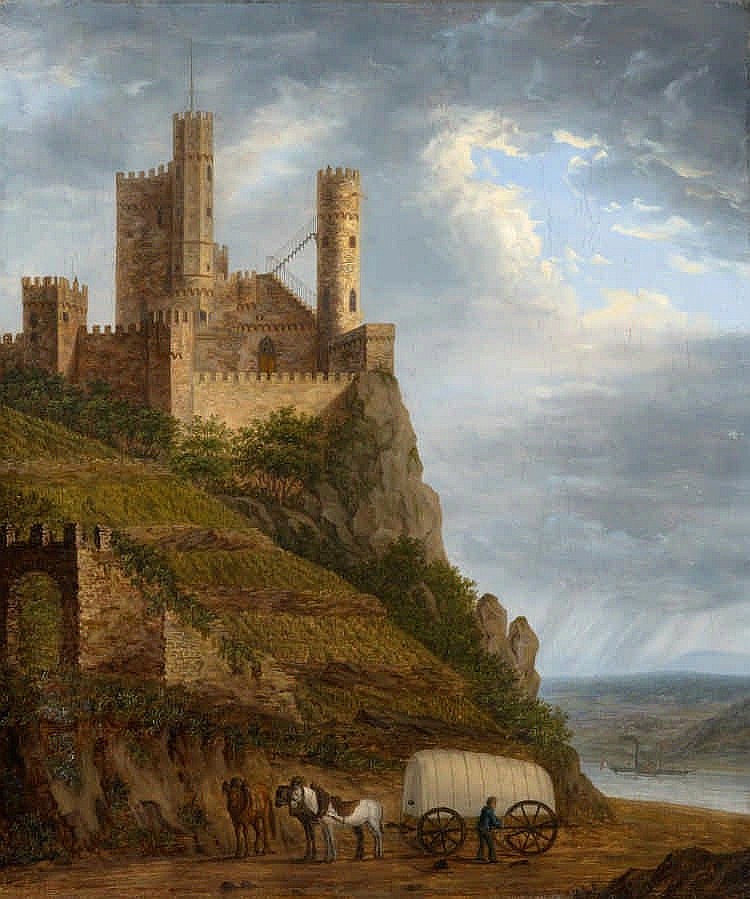
The Rhine Valley and the Castle Rheinstein by Victor Chailly 1831
(English translation © Richard Stokes)
The old knight has fallen asleep;
Rain-storms pass overhead,
And the wood stirs through the portcullis.
Ruff and breast turned to stone,
For centuries he’s sat up there
In his silent cell.
All have gone down to the valley,
Forest birds sing lonely songs
In the empty window-arches.
A wedding-party’s sailing by,
Musicians strike up merrily,
And the lovely bride—weeps.
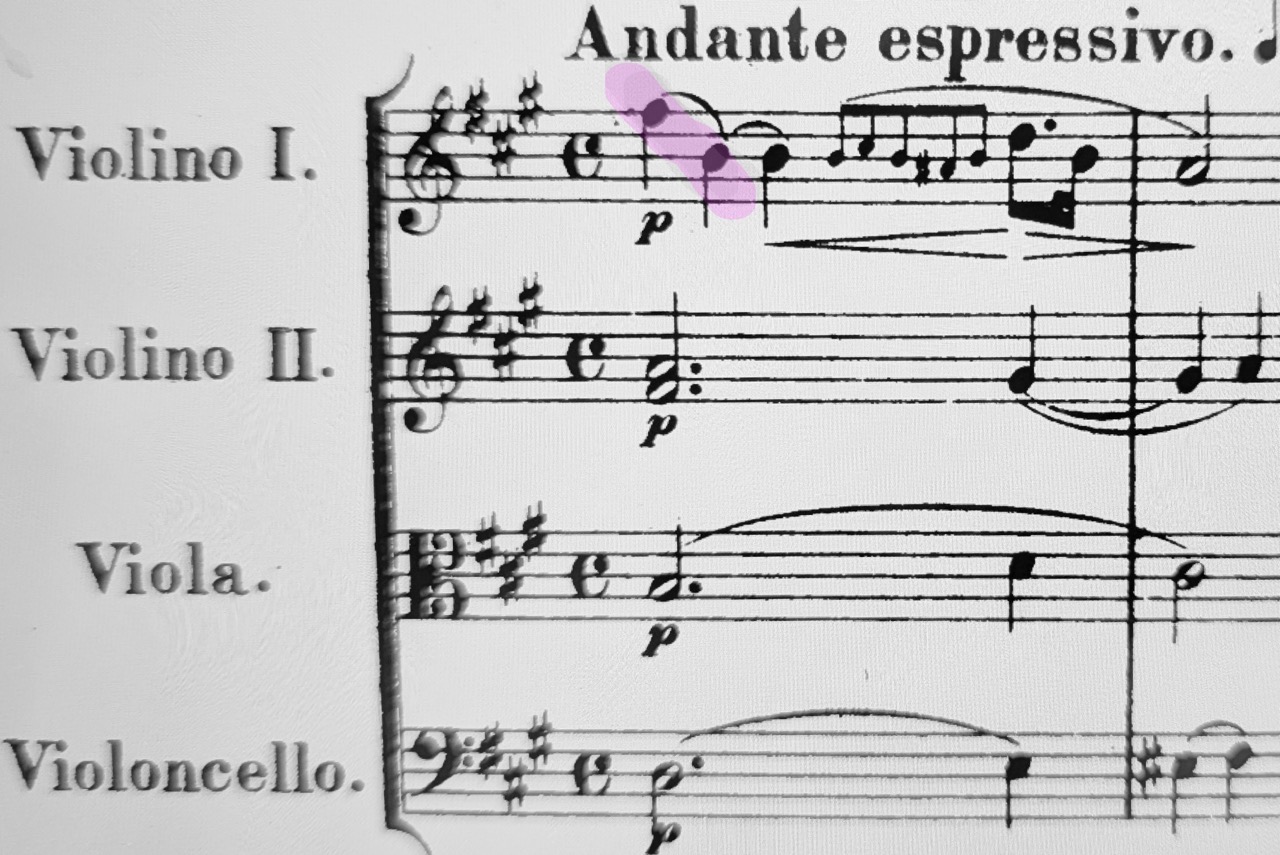
Opening of Schumann’s 3rd string quartet showing the falling fifth in the 1st violin part
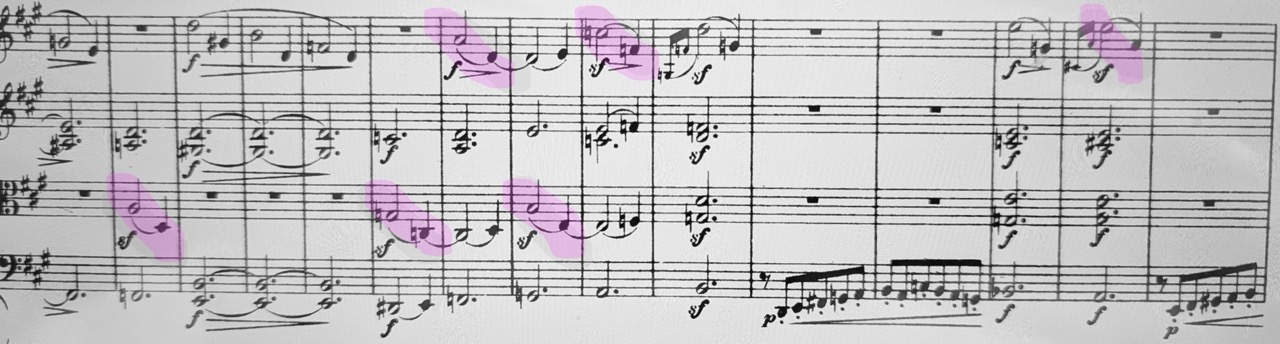
Quartet sequence of falling fifths
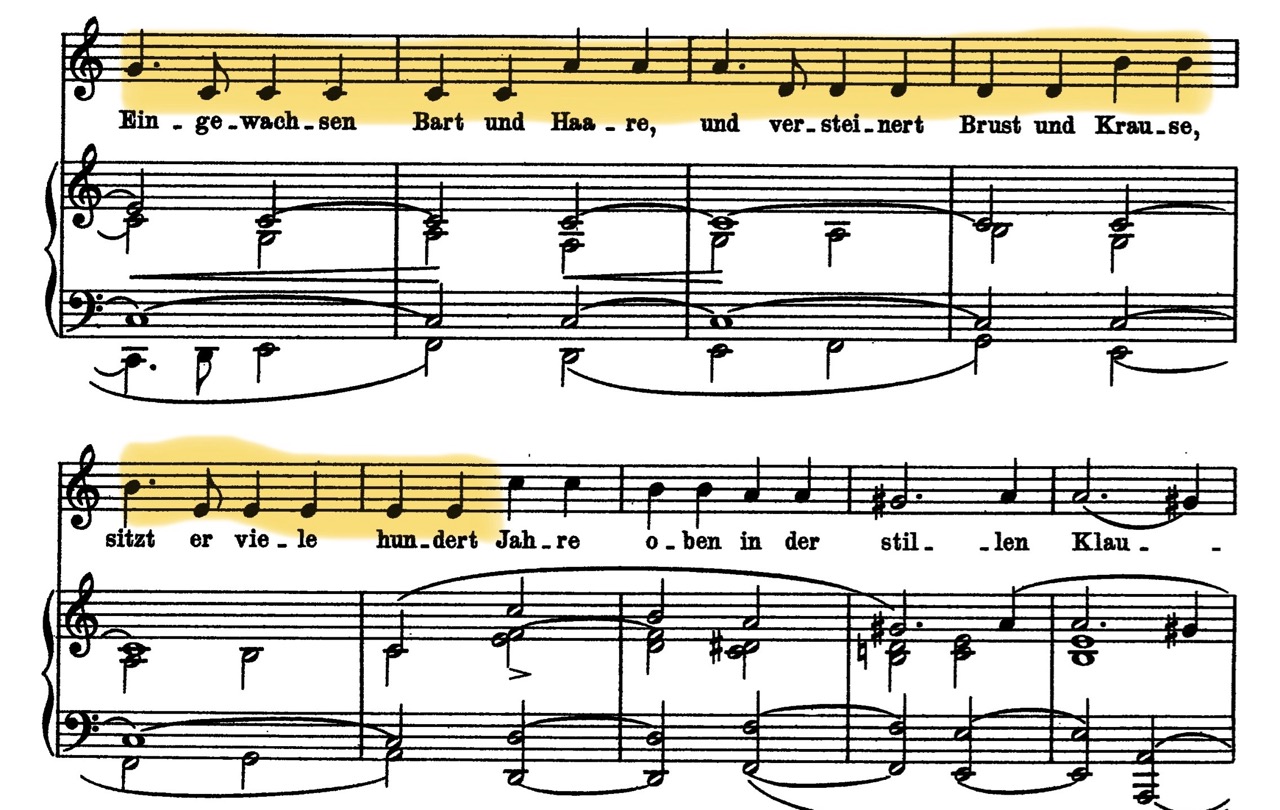
Auf einer Burg song excerpt showing the sequence of falling fifths in the melody.
Here you can hear the similarities between the song passage and the quartet music:
There are so many surprising things going on in Schumann’s music and he clearly relished the format of the string quartet to extend ideas that he employed in the more succinct form of his songs, such as harmonic ambiguity and rhythmic displacement (where what is perceived by the listener isn’t what the musician sees on the page). Special mention should be made of his frequent use of syncopation, which he incorporated deeply into the structure of his music, something he no doubt learnt from Mozart, the first syncopater extraordinaire.
At the heart of Schumann’s music there is a paradox of rousing energy and aching melancholy, summed up in the last lines of Auf einer Burg:
Musicians strike up merrily,
And the lovely bride—weeps.
What is she crying about amidst the clamour of celebration? That she has married the wrong person? (This is something that would have been very much on Robert’s mind, because Clara’s father had been so adverse to her marrying him.) Perhaps she fears the wrench of loss that will at some point inevitably come. I think we can count out that she is weeping with joy, bearing in mind the pacing of the last line in the song. Such are the complexities that preoccupy the Romantic imagination, leaving us as readers and listeners much to ponder on and wonder about.
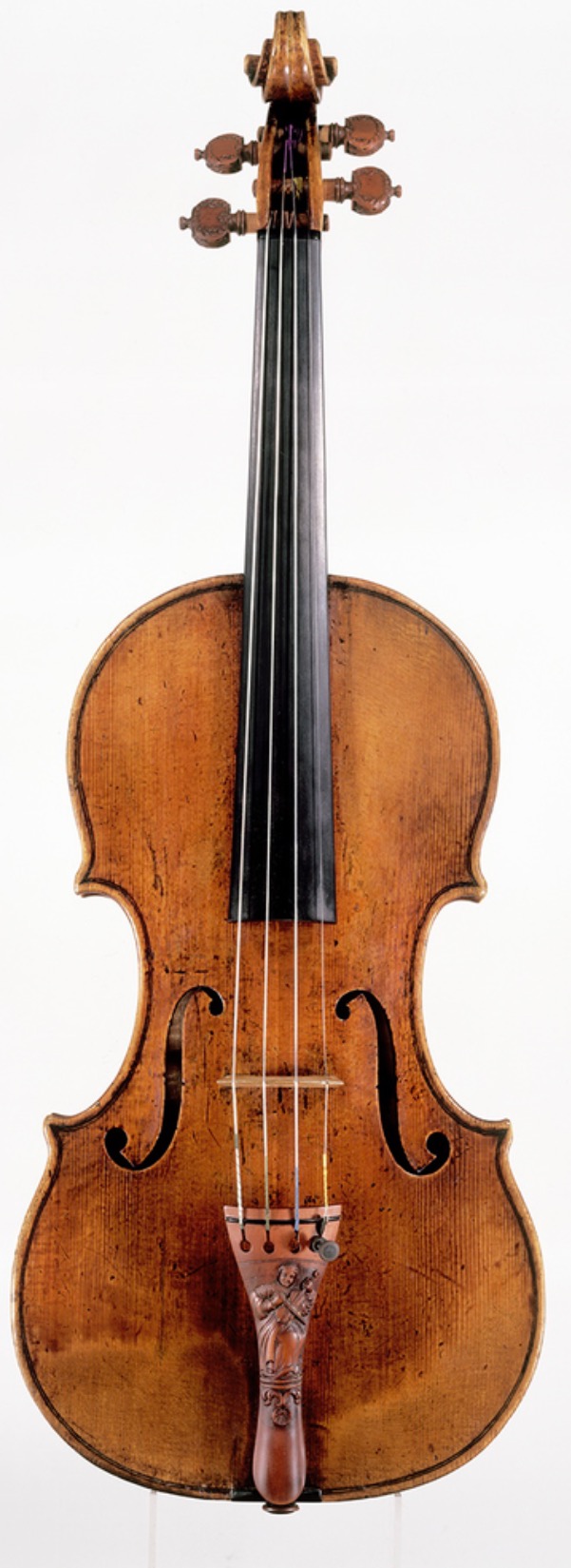
Guarneri del Gesu violin c.1730 played by Fritz Kreisler
Recent Comments