
DSQ blog
A three course Viennese menu
Haydn, Schubert and Webern. Without doubt, these are three of the most significant and influential writers of string quartet music, as well as being hugely important in the history of classical music generally. In a way they summarise everything about the quartet genre. All three were immersed in and central to the music and cultural life of Vienna, albeit at different times.
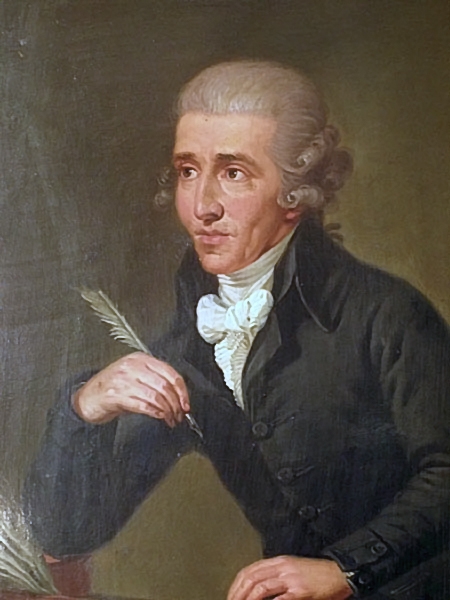
Joseph Haydn c.1770 by Ludwig Guttenbrunn
The musicologist, Sir Donald Tovey, wrote that “every page of the six quartets of Joseph Haydn’s Op. 20 (1772) is of historic and aesthetic importance… there is perhaps no single or sextuple opus in the history of instrumental music which has achieved so much”.
No 5 of the set is in the dark key of F minor. Stringed instruments resonate more freely and richly in keys where the open strings happily resonate, such as D major and G major, so Haydn’s choice of F minor is a deliberate limiting of the brighter tones of the instruments, making for an appropriately sombre and dramatic sonic mood. This could be seen to be a response to the claustrophobic and lonely predicament that Haydn and his fellow musicians found themselves in at the isolated Esterházy palace where they were employed by Prince Esterházy.
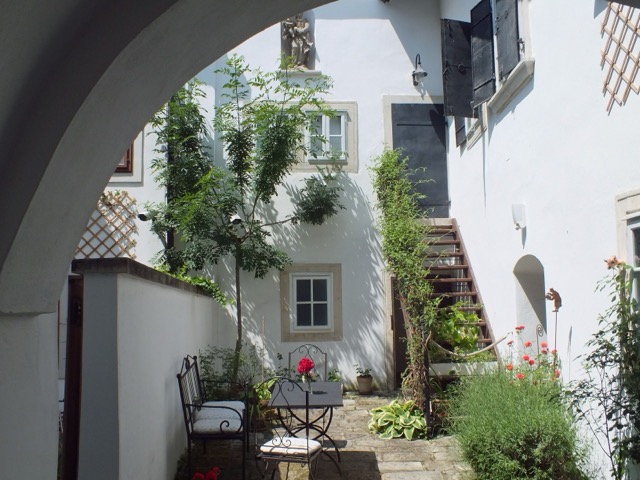
The courtyard of Haydn’s house in Eisenstadt, near the Esterházy palace, fifty miles south of Vienna.
Haydn’s empathy with his colleagues is always apparent in his writing, and despite the intense atmosphere in this music, there are several moments for each player where an unexpected note or surprising new phrase lifts the spirit or even raises a smile. For example, the beautifully shaped arioso of the slow movement suddenly evaporates, the pulse and flow of the music disappearing, making musicians and listeners alike wonder whether they have lost the plot completely.
This work ends with a fugue, the ultimate compositional tour de force, and a way of showing the absolute interdependence of the parts and conversational interplay that is at the core of Haydn’s art. By using a time honoured Baroque technique he was distancing himself from the ‘galant’ style fashionable in the late 1700s.
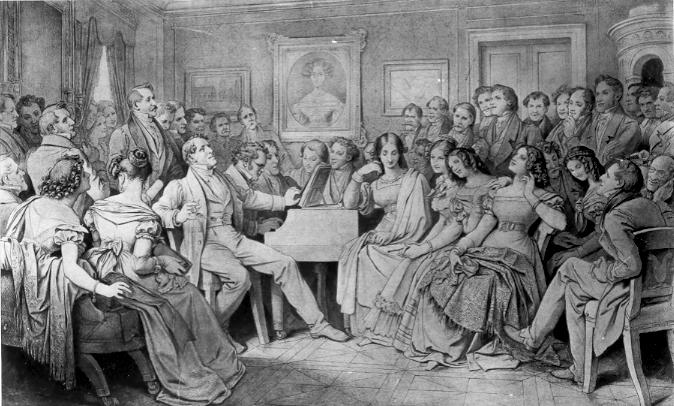
A Schubertiade music gathering, with Franz Schubert at the piano and a picture of Caroline Esterházy on the wall behind him. By Moritz von Schwind
Franz Schubert, when asked some forty years later by a member of the Esterházy family (distantly related to Haydn’s employer) who he was close to, Countess Caroline Esterházy, to compose some music for her, is believed to have replied: “What’s the point? Everything is dedicated to you anyway.” Despite his infatuation with her, she did not return his love. The dichotomy of hope and despair is very apparent in Schubert’s music, no more so than in the G major string quartet D. 887, the last quartet that he wrote (1826). Only the first movement was performed in his lifetime. As with so much of his music, it was the good fortune of future generations to discover the wonders of Schubert’s music, for voice, for solo piano music and various instruments.
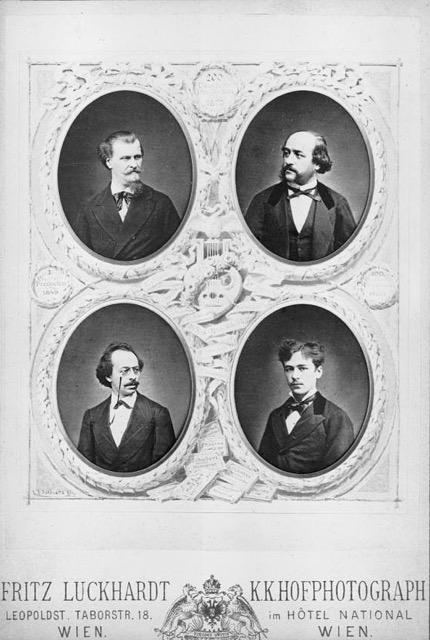
The Hellmesberger Quartet (c.1872) who gave the first performance of the G major quartet in Vienna’s Musikverein in 1850, 22 years after Schubert’s death.
The G major quartet is a visionary work, vast in scope, sometimes cataclysmic, sometimes consoling. The relatively small forces – just the four ‘voices’ of the string quartet – are masterfully crafted by Schubert to convey the extremes of scale that he was wanting to express in this later part of his career; not that he really had a ‘late’ period, as he was only 31 when he died (in 1828.) Anton Bruckner, born two years before Schubert’s death, expanded, in his symphonies, on what Schubert started. There is a strong affinity between the two composers.
Hope/despair is apparent at the very outset – the G major opening statement immediately driven out by G minor. (One is reminded of the opening of ‘Also Sprach Zarathustra’ by Richard Strauss.) This contrast continues throughout the work. ‘Quartet in G major’ is somewhat of a misnomer. Schubert goes to so many far away places, often rendering G major a distant memory.
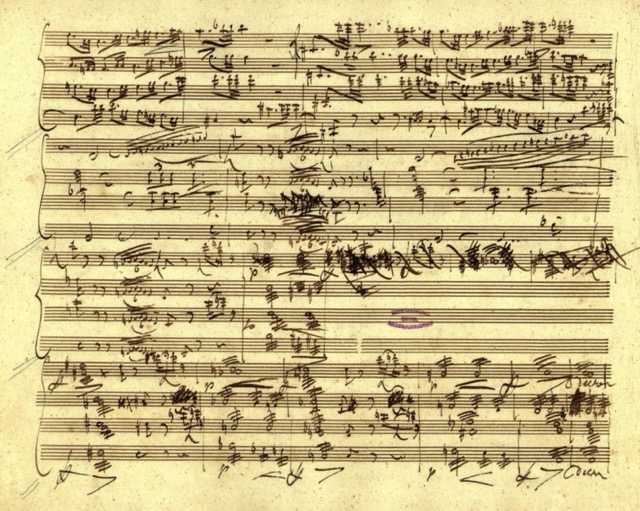
Schubert’s autograph manuscript of the nightmarish section of the slow movement of the G major quartet.
It feels, when playing this music, that Schubert’s use of dramatic harmonic shifts and tremolo bowing take the genre to bursting point. What on earth would he have come up with had he lived longer?! Perhaps this work could be described as being in the spirit of expressionism. It would take another ninety years or so before expressionism became an art movement as such, but it is not such a big leap from this Schubert quartet to music by the early 20th century iconoclasts, Schönberg and Webern.
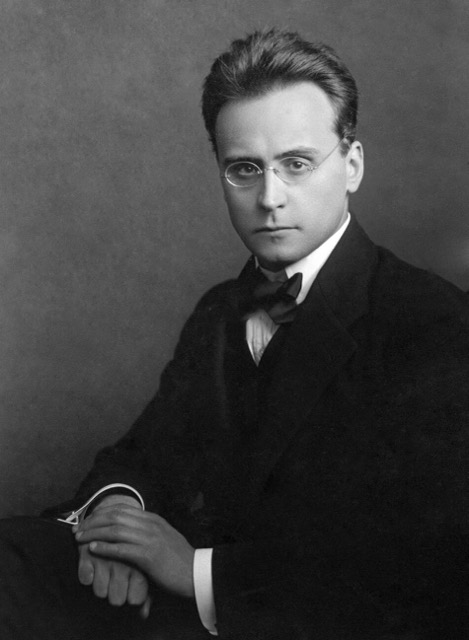
Anton Webern in 1912
Anton Webern sought out Arnold Schönberg for lessons and became his most famous pupil. Both were convinced of the need to develop a way of writing music that extended outwards from classical norms and that would truly reflect the zeitgeist. It took them to a place that many critics found too difficult. Their influence though was profound and Webern in particular is now seen by many as a guru like figure, who pared music down to its essentials and somehow told legends in pieces lasting sometimes no longer than a few seconds.
Before becoming a Schönberg pupil, Webern was taught by Guido Adler, one of the founders of musicology as a discipline, who in turn had been a pupil of Bruckner. Bruckner’s teacher, Simon Sechter, was a fugue addict. He wrote 5,000 fugues, and tried to compose one every day. When our disillusionment with the internet becomes absolute and we look at other available salutary distractions and priorities, the revival of the practice of fugue writing may well become a norm of the daily routine, for some anyway.
Perhaps this link between Webern and Haydn is a touch tenuous, but there is no doubt that the fugue is a musical form as disciplined as the ‘twelve-tone’ system that Schönberg and his acolytes espoused.
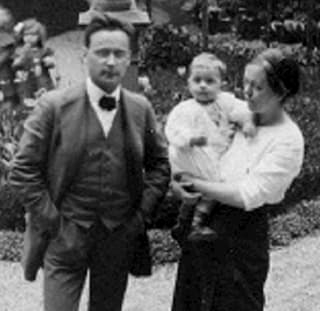
Anton and Minna Webern with their daughter Amalie.
Webern wrote ‘Langsamer Satz’ (Slow Movement) near the beginning of his studies with Schönberg. It may even have been an exercise, drawing on the sound world and mood, to some extent, of Schönberg’s intensely confessional Verklärte Nacht. There is hardly a hint of the radical new path that they were both about to go along. It is believed to have been written after a hiking holiday in the mountains near Vienna with his cousin Minna, who he later married. It is a warm and romantic movement, a meditation, perhaps, on being in the Alpine landscape that he loved, and that he saw so effectively depicted in the paintings of one of his favourite artists, Giovanni Segantini. Maybe there is a hint of anxiety too that resonates with the complex psycho drama of Verklärte Nacht.
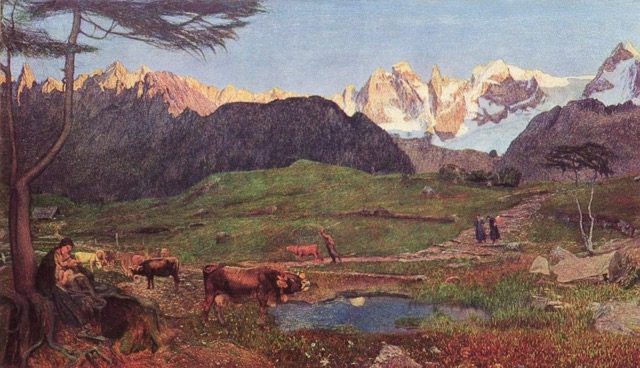
Alpenlandschaft bei Sonnenaufgang, by Giovanni Segantini. (Stadel Museum, Frankfurt am Main)
It is believed that Langsamer Satz was not performed in Webern’s lifetime (he died in 1949, in absurd and tragic circumstances, shot in error by an American soldier.) It was given its first official performance in 1962, by the University of Washington String Quartet.
The perfect fifth
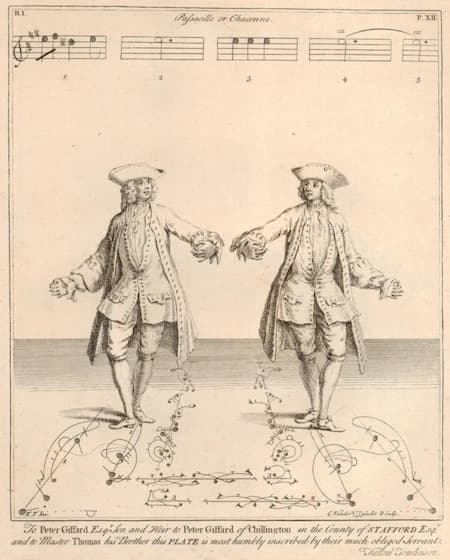
Tomlinson: The Art of Dancing Explained. The Passacille or Chaconne, plate 12, 1735
Wandering minstrels, or more specifically wandering violinists, form the thread that weaves its way through the works that we are playing by Rameau, Kreisler and Schumann.
Very little is known about Jean-Philippe Rameau’s early years but we do know that he was born in Dijon in 1683, and worked as a violinist in travelling companies before moving to Paris, then returned to Dijon as organist of the main church there. Maybe he had been missing the mustard.
He then took up similar posts in Lyon and Clermont-Ferrand before returning to Paris in 1722. It was at Clermont-Ferrand that he wrote his ground breaking Treatise on Harmony, which became the principle text book on musical theory in Europe for many many years. He took a scientific approach, informed by an understanding of nature’s patterns. (Debussy was the main rebel who parted from Rameau’s principles in the late 1800s, ushering in a new age.)
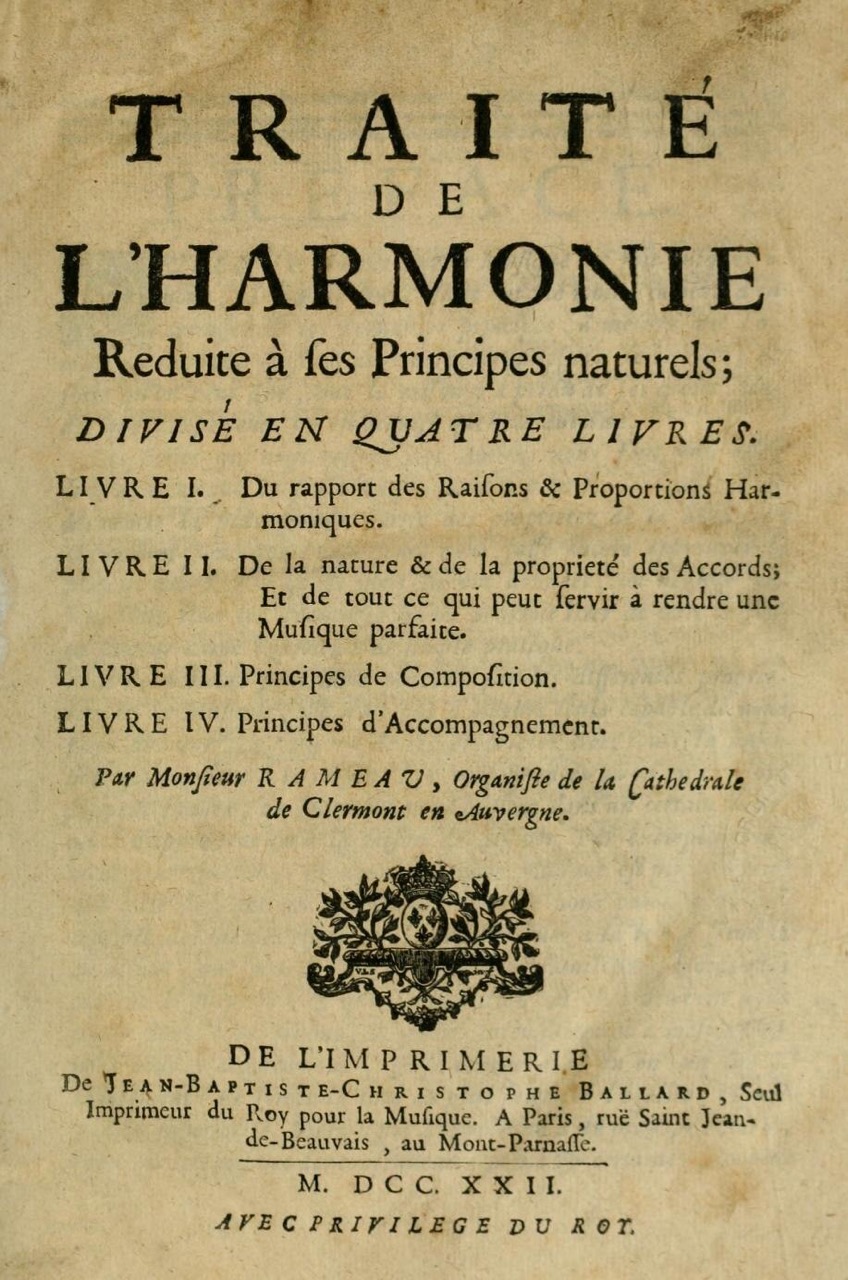
Rameau’s Treatise on Harmony, 1722
Despite his didactic leanings and his reputation throughout Europe as “The Isaac Newton of Music”, he wasn’t a fluent speaker and his handwriting was difficult to read. (He had been taught how to play harpsichord before learning to read or write.) But his music says it all. For him, the primary purpose of music was to express, please the ear and move the passions and he certainly knew how to convey all of this.
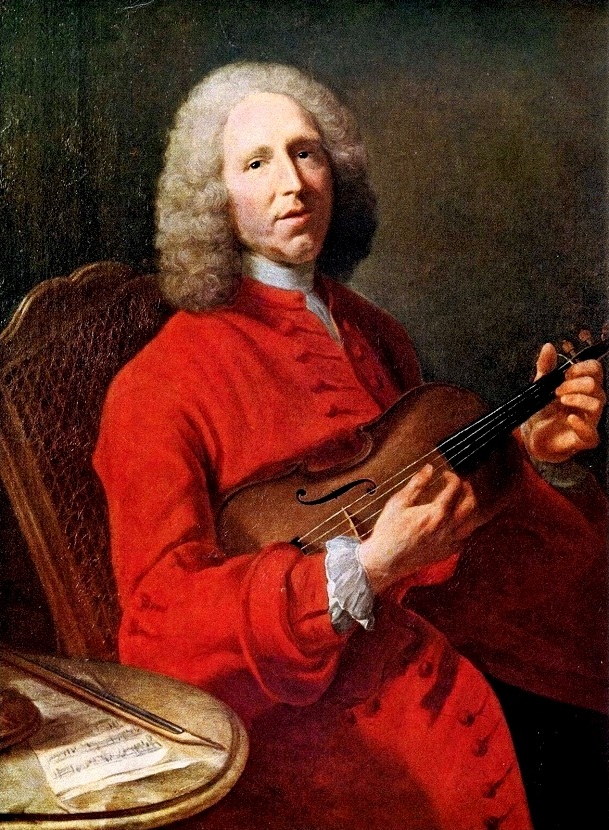
Jean-Philippe Rameau, by Jacques Aved, 1728
It is not surprising that Rameau threw himself avidly into the world of baroque opera and it is operas that he is principally known for. Castor and Pollux – yes, an opera, not a Victorian remedy for indigestion – was first performed in 1737. The opera culminates in a “Festival of the Universe” in which stars, planets and sun celebrate the twin brothers being received into the Zodiac as the constellation of Gemini. The Chaconne that we are playing (in a very effective arrangement for string quartet by the Dudok Quartet) is part of the music accompanying the dancing in this celebration.
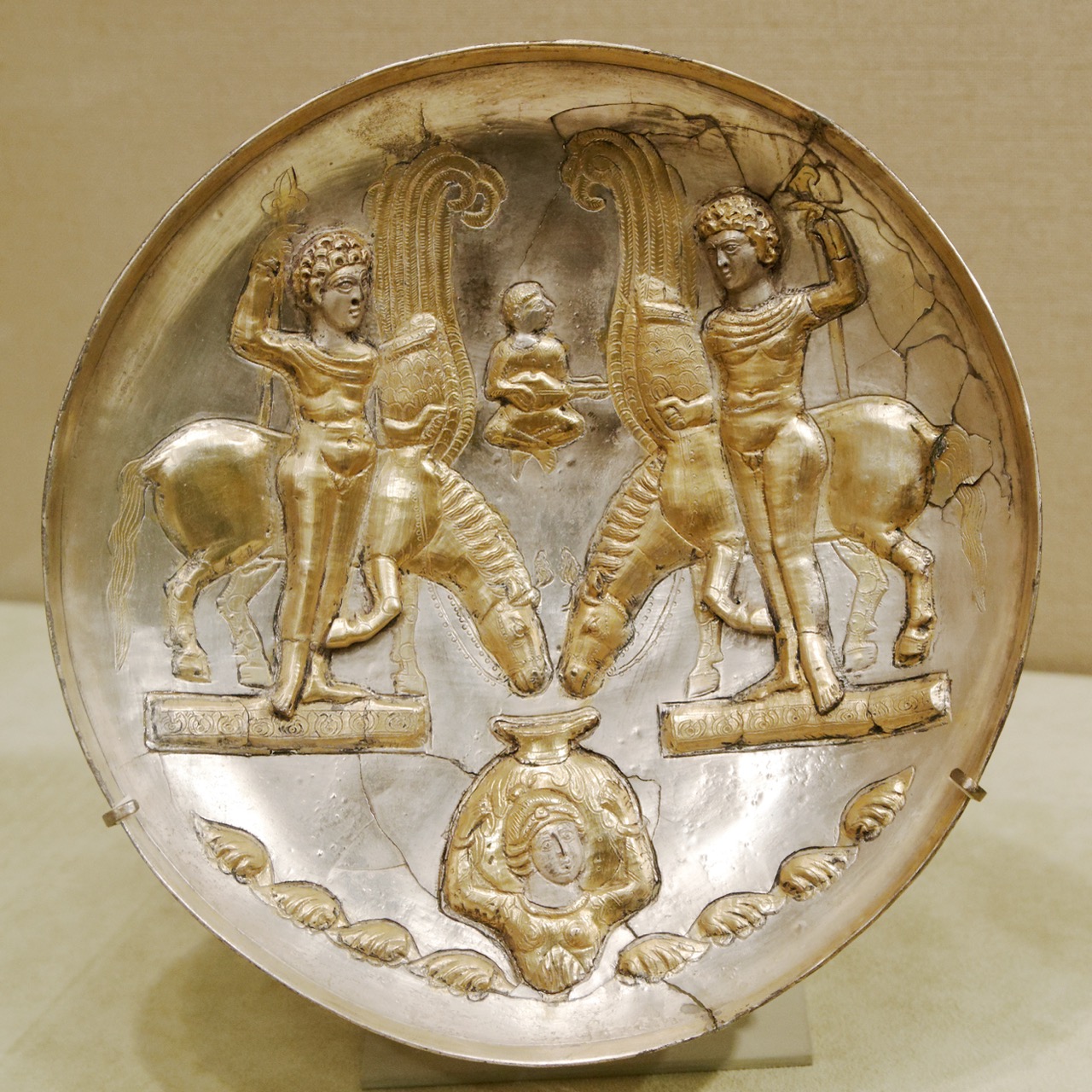
Plate with youths and winged horses, Sassanian artwork after the Graeco-Roman iconography of the Dioscuri, 5th-6th century
The Chaconne, originally a song and dance form that originated in South America made up of a repeated bass line pattern around which there was variation and embellishment, became a popular dance in the baroque era. In operas it was often placed in the finale, as a counterbalance to the overture. As with all baroque dance, it was pretty complex. Fortunately this illustration from Rameau’s time gives us a few pointers as to how to successfully negotiate its intricacies.
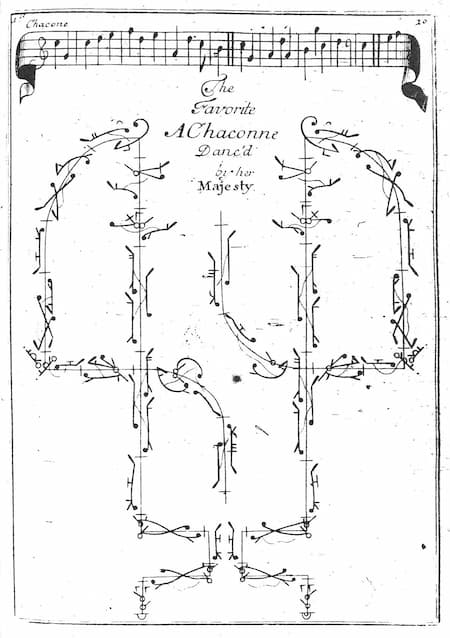
How to dance a chaconne. From A Collection of Ball-Dances performed at the Court. Mr Isaac’s ‘The Favorite 1706
Fritz Kreisler, the most famous violinist of the early 1900s, was one of the celebrated troubador musicians of the time, like other musical stars such as Toscanini and Paderewski, who did a huge amount of travelling across the Atlantic in ocean liners, heading for concert tours in America, Europe and further overseas.
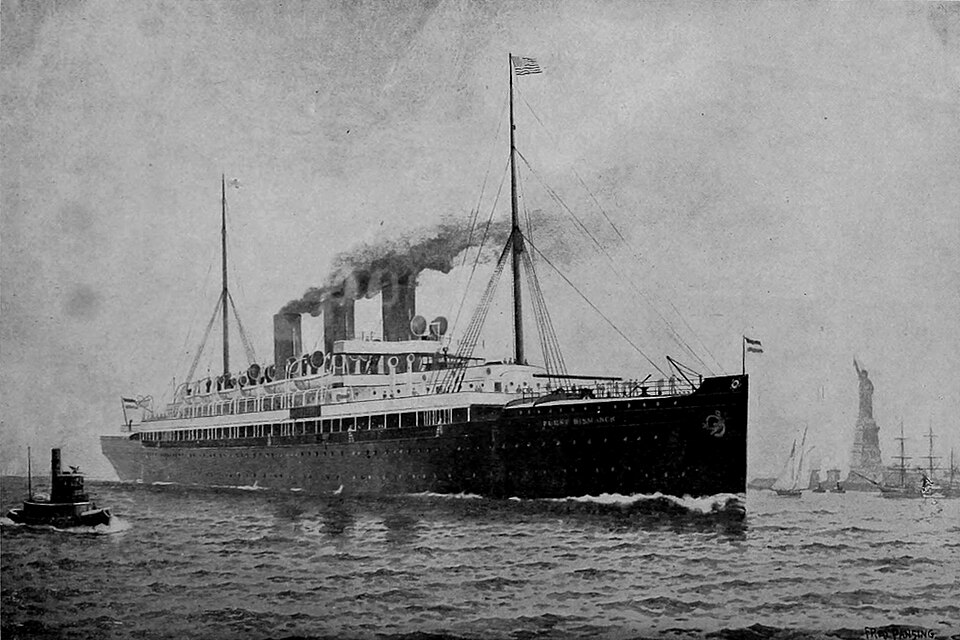
SS Prince Bismarck
It was on one of these trips, in 1901, on board the S.S. Prince Bismarck (the ship that Tchaikovsky had sailed on when he returned to Russia after his only trip to America in 1891) that Kreisler had a life changing encounter in the ship’s barbershop, which also sold knick-knacks and women’s hats.
Kreisler recalled: “As I got up from the barber’s chair, I saw the reflection of a beautiful red headed American girl in that mirror. I fell in love with her instantly for she smiled at me then and there; and I smiled back. That was the beginning and the end for me. . . . We became engaged on that voyage and were married a year later in New York City, and afterward again by the Austrian ambassador in London, and our double marriage took.” (It actually turned out to be a triple marriage. For rather complicated reasons linked with Harriet’s status as a divorcee, they eventually got married in the Catholic Church, as was their wish, in 1947, after her ex-husband had died.)
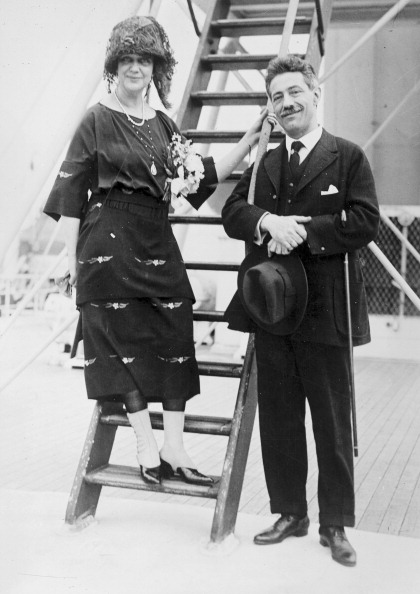
Harriet and Fritz Kreisler
When, in July 1914, the call came to serve in the Austrian Army, Fritz and Harriet (though she was an American citizen) did not hesitate to join up. “It has made me angry sometimes when people have said, ‘How could they take an artist and let him fight?’ They should rather not think it worthy of any comment. I am an Austrian. As soon as war began, the last thing I thought of was a violin or that I had ever played one. Why should I claim immunity as an artist?” Fritz headed off to the battle front while Harriet served in the Red Cross.
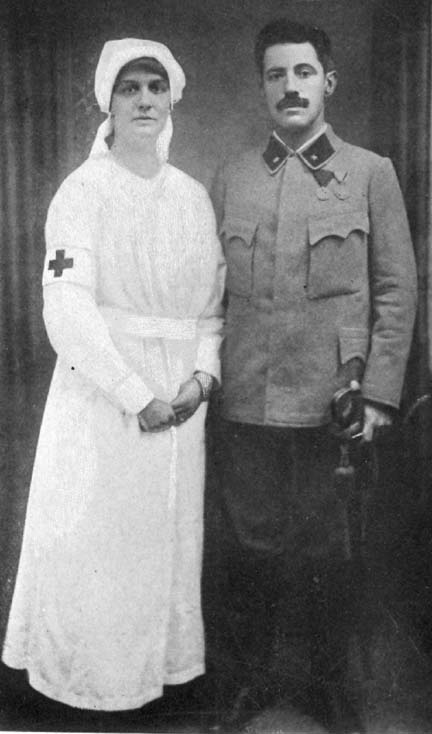
He fought in dire circumstances against the Russians in Poland and after a particularly close encounter with Cossack cavalry, when he was trampled on and impaled by a bayonet, he lay injured in a trench for seven hours before being picked up by a medical orderly. Following this he was exempted from further service. Harriet and Fritz moved to New York and embarked on a concert tour, even though he was still “limping and leaning on a cane.” However, anti-German feelings were running high and the continuation of the tour was considered too provocative so it was cancelled.
Kreisler eventually re-emerged as a top violinist some years later, no doubt aided by the advent of recording technology, which meant his fame spread like wildfire.
Harriet and Fritz remained totally devoted and besotted with each other for the rest of their lives. “She is a very remarkable woman with a fine brain and uncanny intuition. She is a self-sufficient person and in that respect, has what I lack. I needed her and she has made the way easier for me all these years, for she has looked after me in a natural every day way. When I say such things about her, she says, “That’s right, Pop!” She calls me Pop or Fritzi, and I like it.”
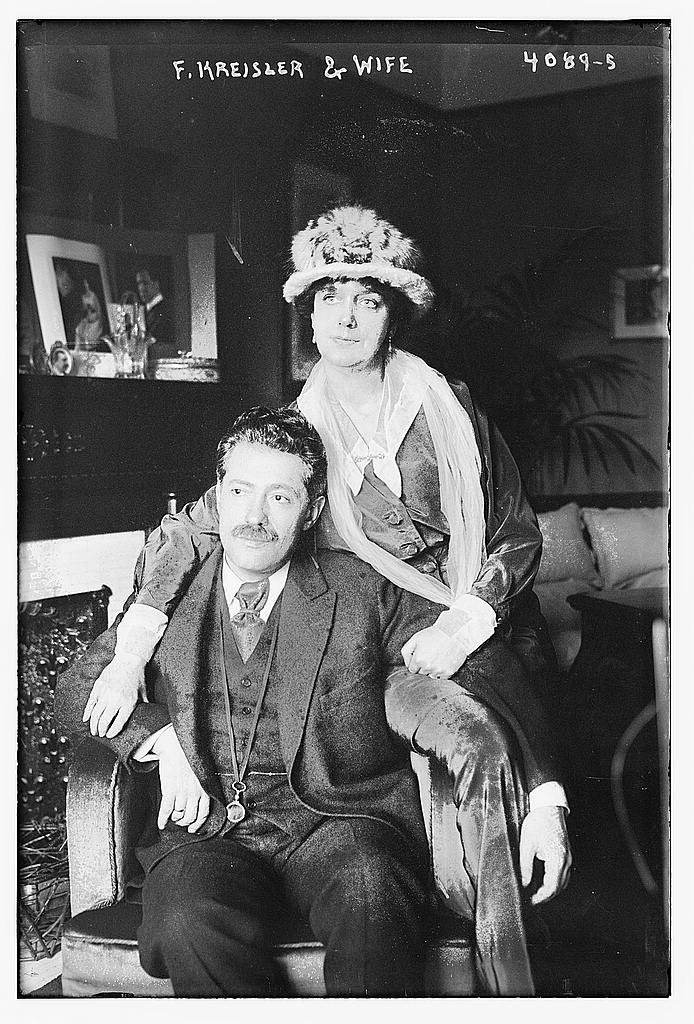
It is not surprising therefore that Fritz dedicated his string quartet to Harriet. Written just after the Great War, in 1919, it is very far removed from the short and relatively light solo pieces that he wrote as encores for his violin recitals. He was an extremely accomplished composer and pianist as well as being a superlative violinist. In the quartet he allowed himself to fully indulge his creative and technical skills. It is a work deeply evocative of the Vienna of his childhood; decadent, charming, but with a sense of being on the cusp of huge change and uncertainty.
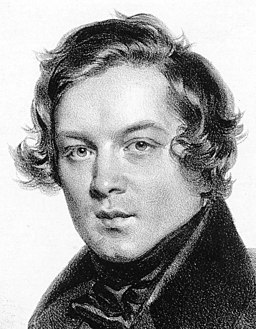
Robert Schumann by Joseph Kriehuber 1839
“All my life I have regarded vocal music as inferior to instrumental music, and have never considered it great art.” This is perhaps a surprising statement by Robert Schumann, pronounced before his frenzied ‘year of song’, 1840 (also the year of his marriage to Clara Wieck), when he wrote countless vocal masterpieces.
Two years later, and alone in Leipzig while Clara was away on a concert tour, Robert said that he was having “quartet-ish thoughts”. (One wonders how romantic Clara found this window into his mind.) He embarked on a study of the quartets of Mozart and Beethoven. On Clara’s return he started work writing three string quartets.
He was a literary man almost as much as a composer and it is clear from his song settings how much the written word sparked his imagination. There is no doubt that elements of his song writing found their way into his instrumental music. In his third quartet he quotes directly from his setting of a poem by Joseph von Eichendorff, Auf einer Burg, part of the Liederkreis Op 39 song cycle.
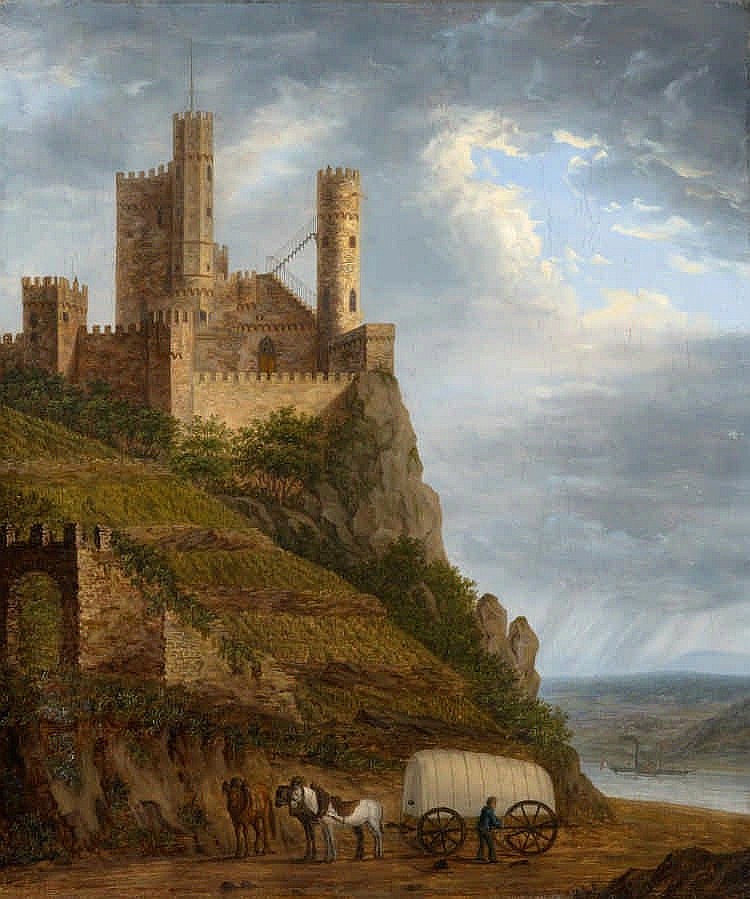
The Rhine Valley and the Castle Rheinstein by Victor Chailly 1831
(English translation © Richard Stokes)
The old knight has fallen asleep;
Rain-storms pass overhead,
And the wood stirs through the portcullis.
Ruff and breast turned to stone,
For centuries he’s sat up there
In his silent cell.
All have gone down to the valley,
Forest birds sing lonely songs
In the empty window-arches.
A wedding-party’s sailing by,
Musicians strike up merrily,
And the lovely bride—weeps.
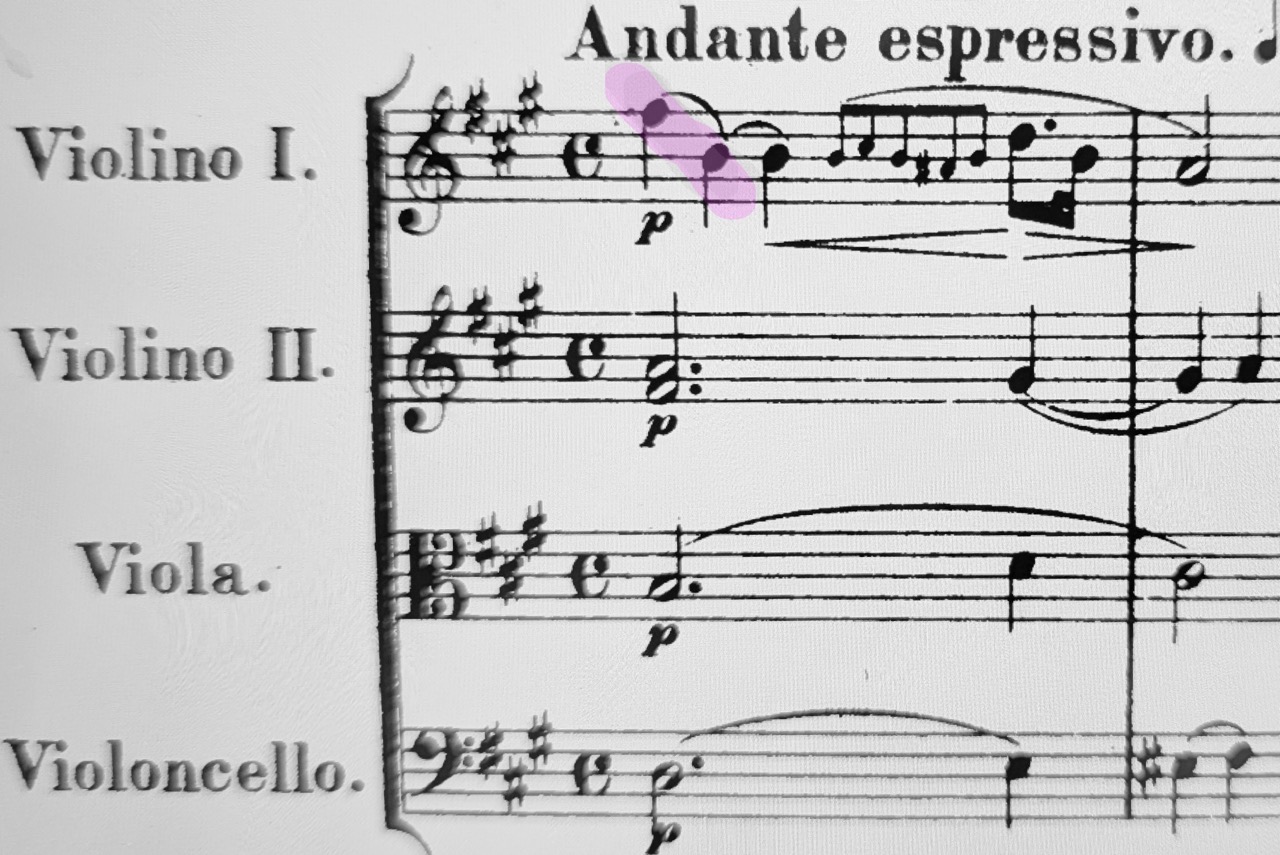
Opening of Schumann’s 3rd string quartet showing the falling fifth in the 1st violin part
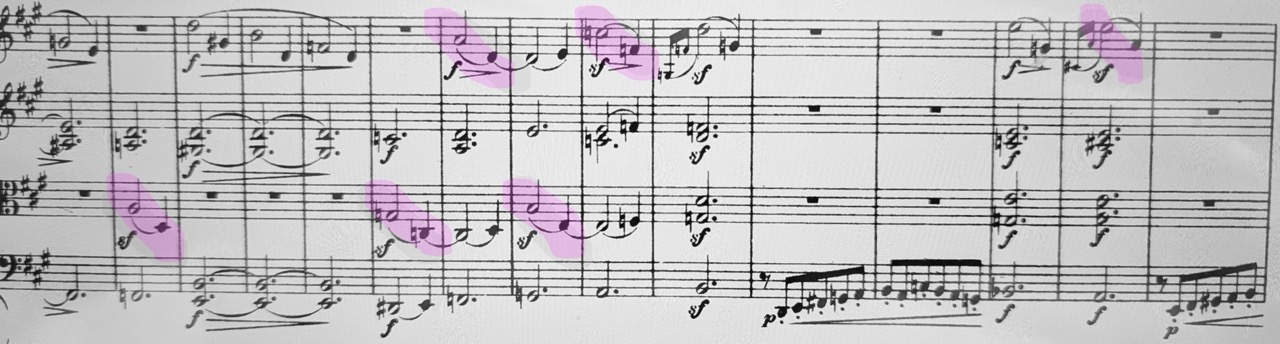
Quartet sequence of falling fifths
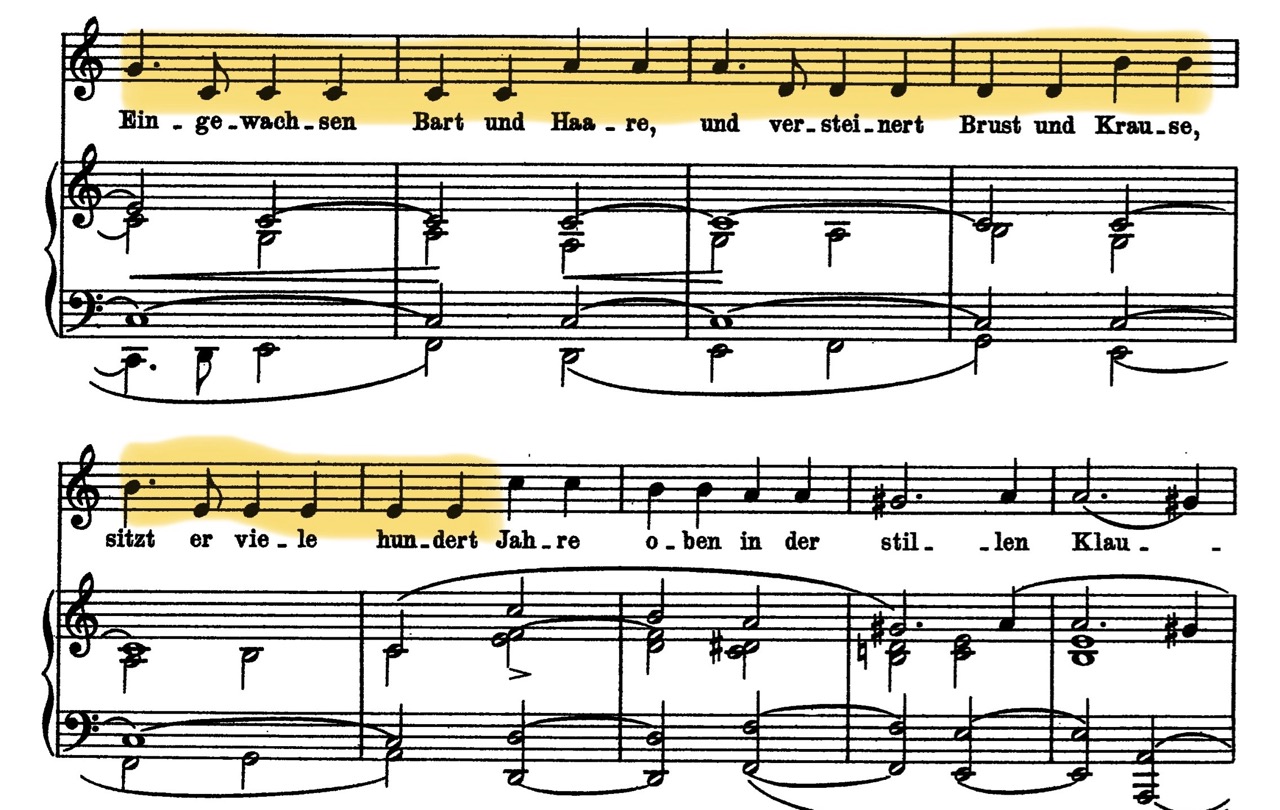
Auf einer Burg song excerpt showing the sequence of falling fifths in the melody.
Here you can hear the similarities between the song passage and the quartet music:
There are so many surprising things going on in Schumann’s music and he clearly relished the format of the string quartet to extend ideas that he employed in the more succinct form of his songs, such as harmonic ambiguity and rhythmic displacement (where what is perceived by the listener isn’t what the musician sees on the page). Special mention should be made of his frequent use of syncopation, which he incorporated deeply into the structure of his music, something he no doubt learnt from Mozart, the first syncopater extraordinaire.
At the heart of Schumann’s music there is a paradox of rousing energy and aching melancholy, summed up in the last lines of Auf einer Burg:
Musicians strike up merrily,
And the lovely bride—weeps.
What is she crying about amidst the clamour of celebration? That she has married the wrong person? (This is something that would have been very much on Robert’s mind, because Clara’s father had been so adverse to her marrying him.) Perhaps she fears the wrench of loss that will at some point inevitably come. I think we can count out that she is weeping with joy, bearing in mind the pacing of the last line in the song. Such are the complexities that preoccupy the Romantic imagination, leaving us as readers and listeners much to ponder on and wonder about.
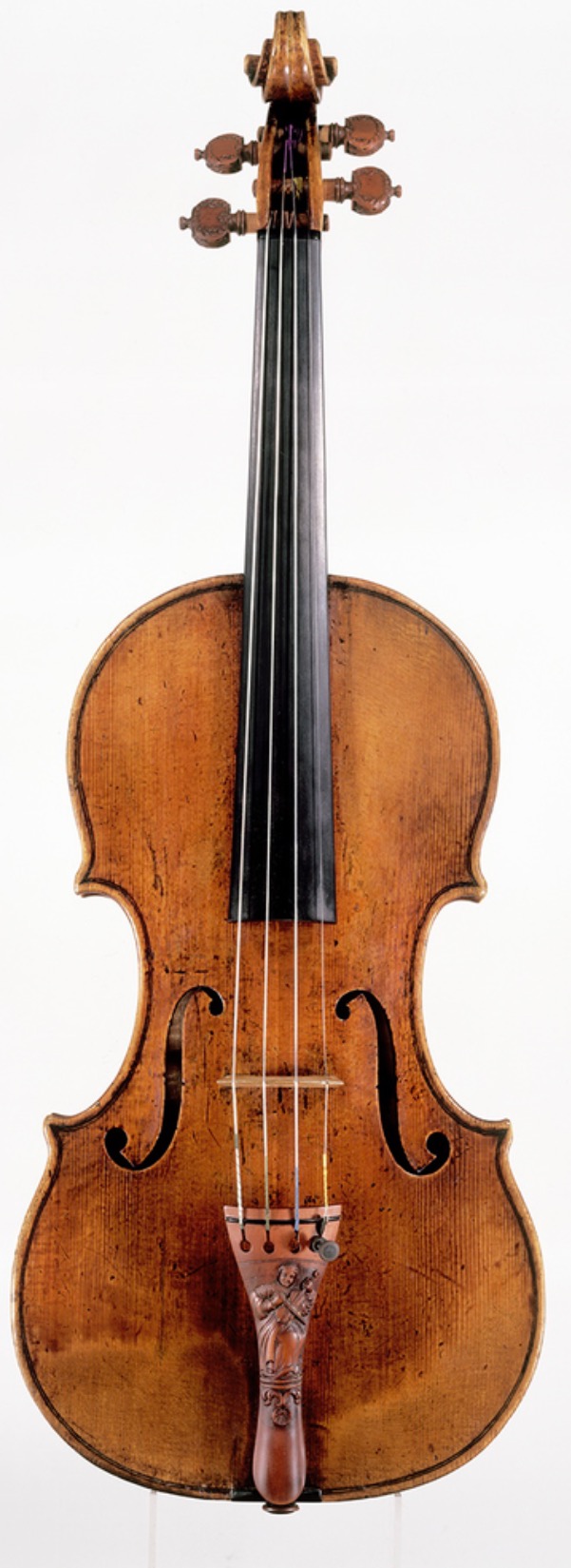
Guarneri del Gesu violin c.1730 played by Fritz Kreisler
Airs and graces
National identity is a very topical subject, to put it mildly. The three works in DSQ’s autumn programme have overt affinities with particular nationalities while not being excessively nationalistic about it.
How we have somehow avoided programming Haydn’s ‘Emperor’ quartet Op 76 No 3 up to now is a bit baffling. It is one of Haydn’s most celebrated works, with a slow movement that has probably the best known and most played tune that he ever wrote.
Haydn was very impressed when visiting London twice between 1791 and 1795, with the role of the British national anthem “God save the King” in unifying and motivating people in a sense of national identity. Very aware of the imminent threat of the Austro-Hungarian empire being invaded by the French, under Napoleon, he and others felt that there was a need for an Austrian national anthem to help rally the nation. The result was “Gott erhalte Franz den Kaiser”, with words by Lorenz Leopold Haschka and music by Joseph Haydn.
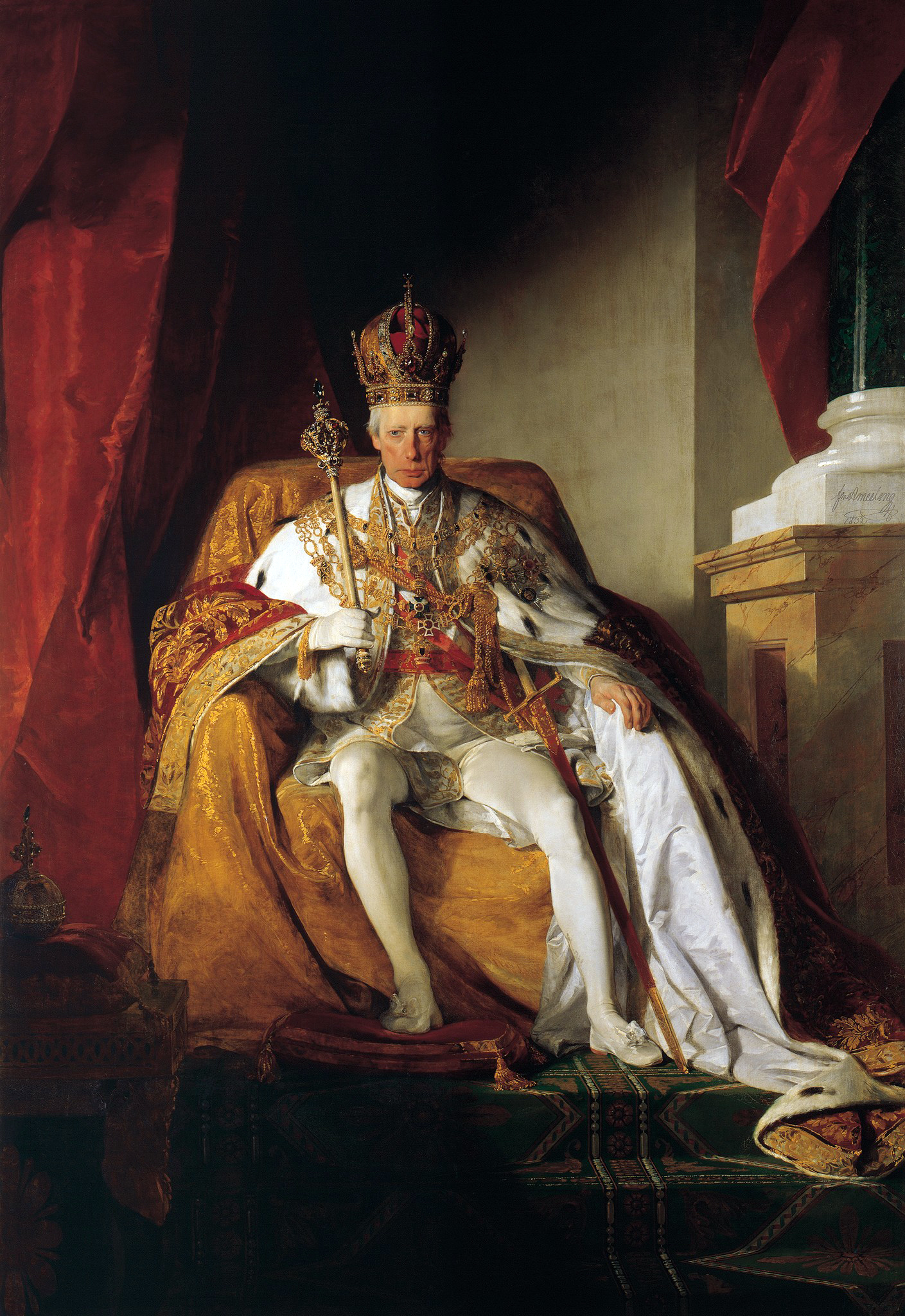
Franz II and I, Holy Roman Emperor (1768-1835) by Friedrich von Amerling c.1832
This tune (requisitioned years later for use as the German national anthem as we know it), Haydn thought to place at the heart of his Op 76 No 3 string quartet, written in the same year as the anthem. Haydn treats the tune to a set of variations, all four quartet members having a chance to play the theme accompanied by the others. It is gentle and dignified throughout, and utterly devoid of bombast, as if Haydn is suggesting that in grace and sensitivity there is strength.
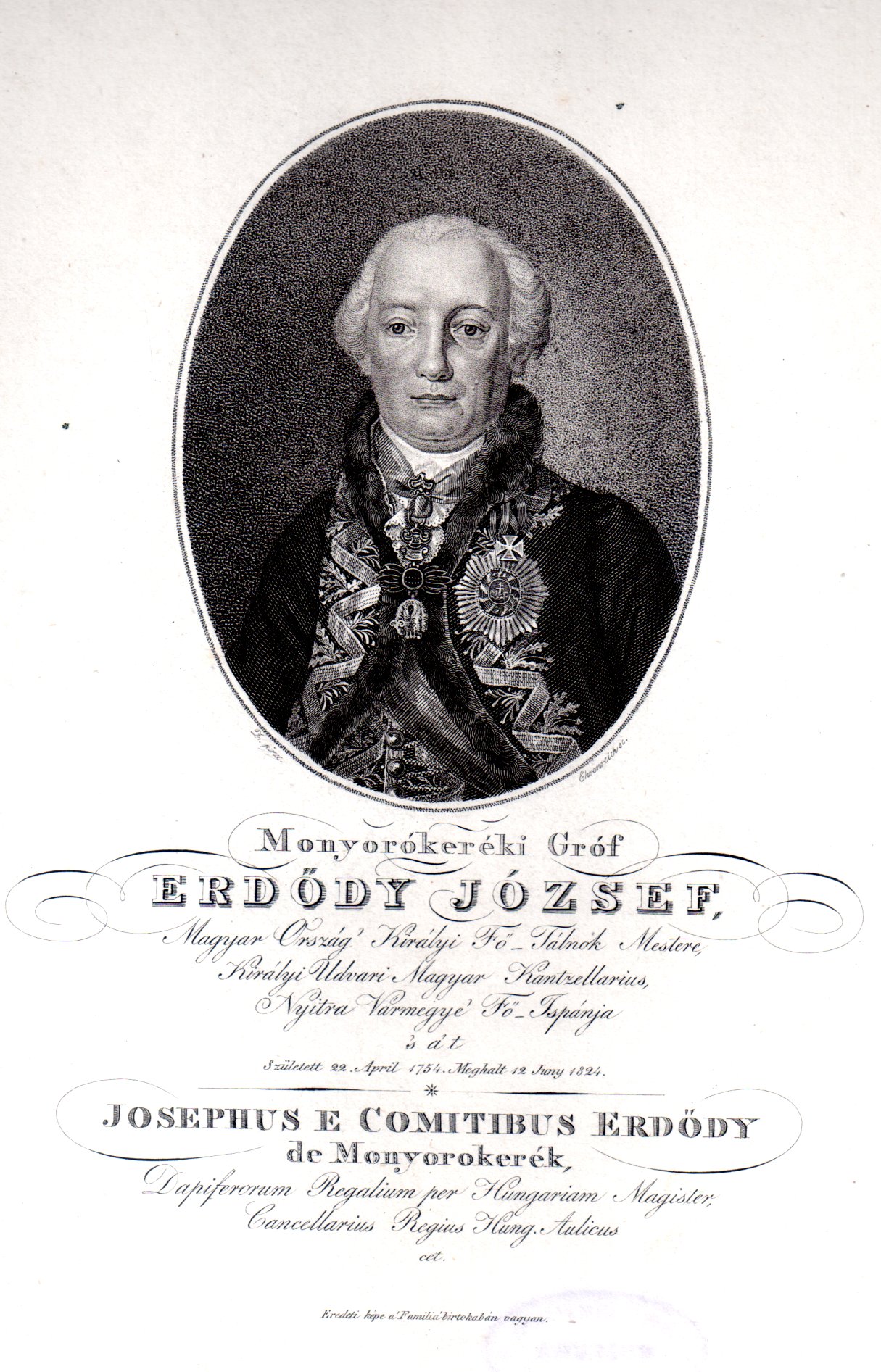
Count Joseph Erdody (1754-1824), dedicatee of Haydn’s Op 76 quartets
Frank Bridge’s composition teacher at the Royal College of Music, Sir Charles Villiers Stanford, was doggedly conservative in his musical tastes, and yet his pupils were not always so conformist. The composer George Dyson wrote, “In a certain sense the very rebellion he(Stanford) fought was the most obvious fruit of his methods. And in view of what some of these rebels have since achieved, one is tempted to wonder whether there is really anything better a teacher can do for his pupils than drive them into various forms of revolution.” Frank Bridge certainly pushed the boundaries in his music writing, and one of his lasting legacies is his encouragement to his pupil Benjamin Britten to do so too.
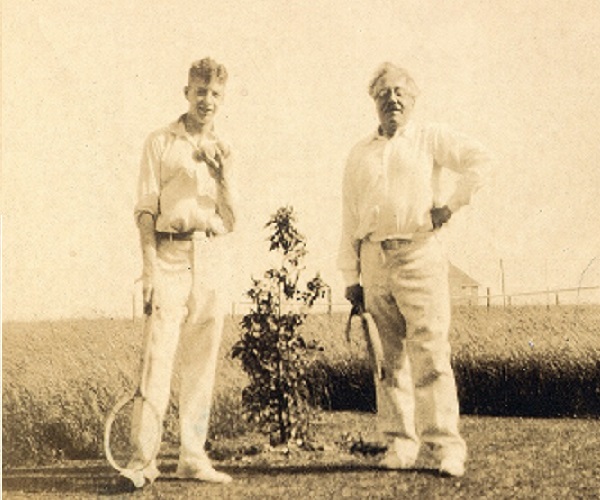
Benjamin Britten and Frank Bridge sport the fashionable tennis gear of their time.
Bridge wrote his take on The Londonderry Air (1908) in response to a request from the Hambourg String Quartet, who asked J D Davis, Hamilton Harty, Eric Coates and Bridge to write four movements based on the Londonderry theme. (Coates and Bridge were both accomplished viola players, as were the other composers in our programme.) Bridge’s contribution is sensitive to the spirit of this beautiful traditional Irish melody, with added input of typically Bridgean colourful harmonies and rhythmic statements. It was written at a time of increased interest in traditional music, with composers such as Vaughan Williams and Bartok integrating traditional sources with their own original compositions.
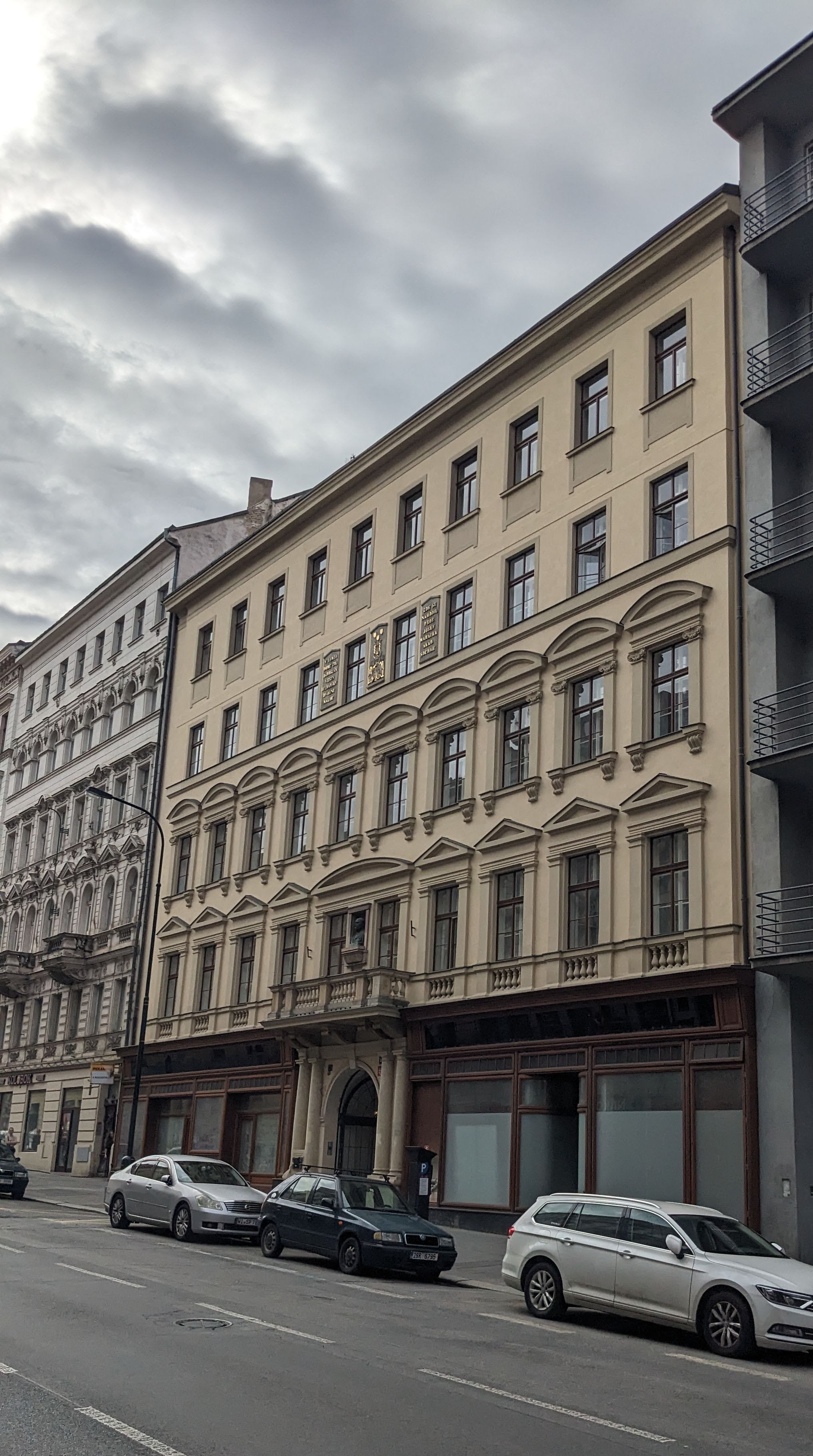
Dvorak’s residence on Zitna Street, Prague, where he lived with his wife Anna and their children at the time that he wrote his ‘Slavonic’ string quartet. (The Dvorak’s lived in an apartment on the second floor.) Photo: Andrew Gillett
Dvorak’s 10th string quartet (Op 51), written 1878-79, was commissioned by Jean Becker of the celebrated and influential Florentine Quartet, who requested a quartet written “in the Slav” spirit, which was exactly what he got. It is a heartfelt work, clearly referencing Slavonic music and dance forms but without driving home a strict nationalist agenda. The listener is swept up in the enjoyment of the characteristic melodies and themes. There are definite hints of parts of the 7th and 8th symphonies, and Dvorak’s love of nature is never far away.
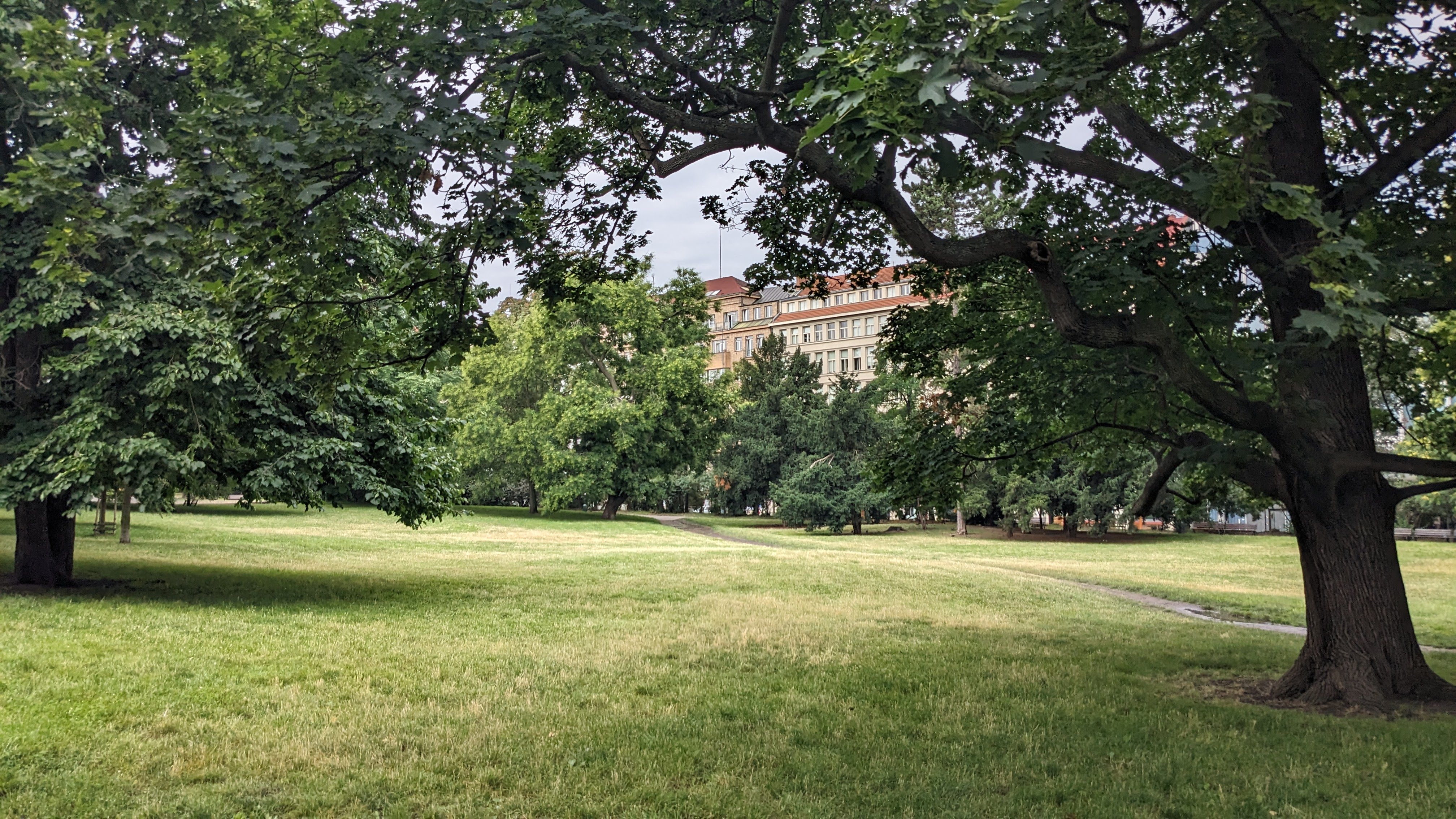
Karlovo park, Prague, a short walk from the Dvorak’s house. Dvorak loved to spend time there on his morning constitutional, when he wasn’t heading off to the train station to indulge is his fondness for anything linked with trains and train travel. Photo: Andrew Gillett
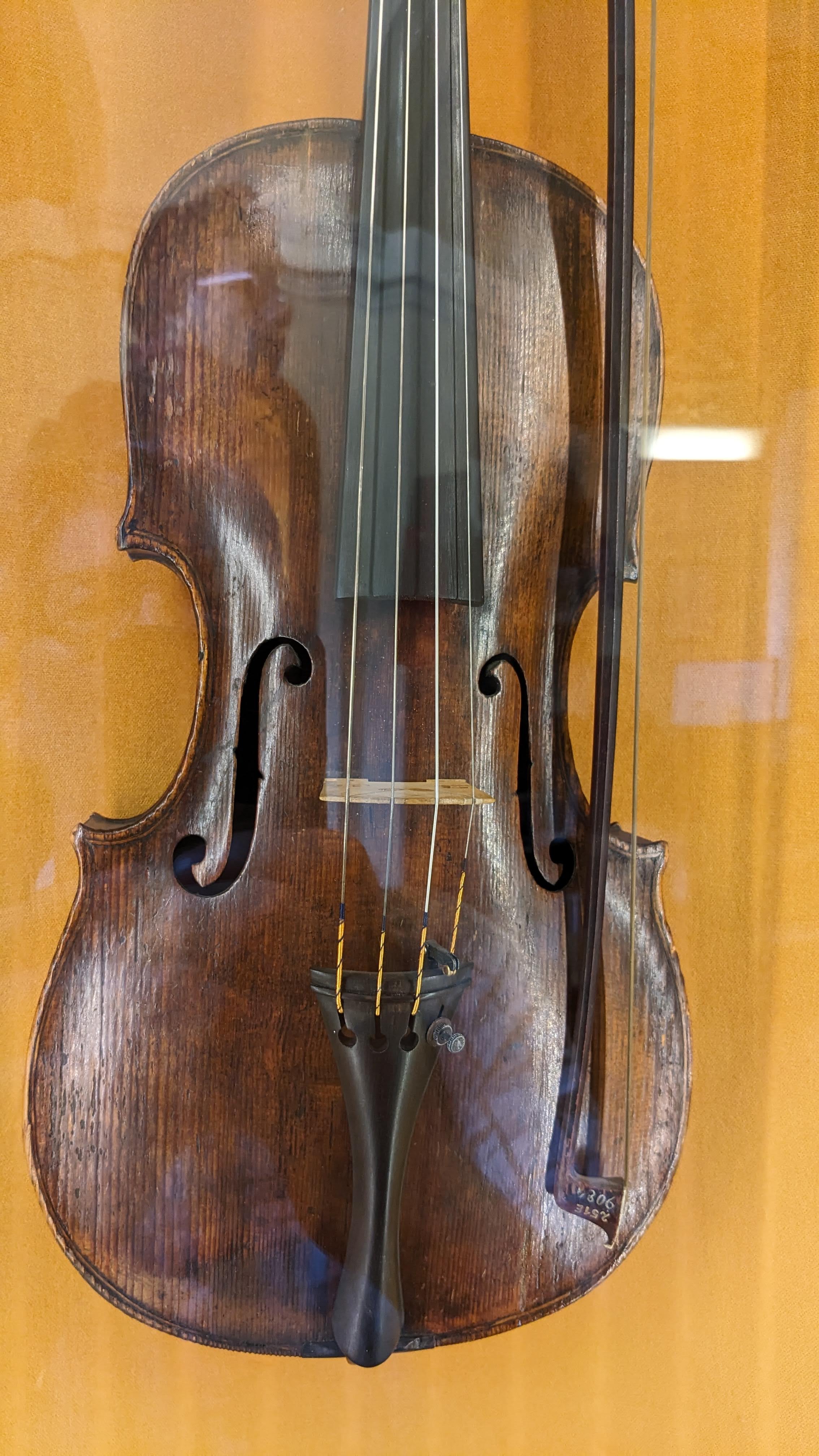
Dvorak’s viola, much used by him in his professional playing career in theatre orchestras and ensembles. Photo: Andrew Gillett
A sorceress, a magician and a dog
The sorceress Armida was the subject of Joseph Haydn’s 1784 opera, one of his favourite works.
The tale of Armida falling in love with the sleeping crusader Rinaldo at the point of killing him, and transporting him to her enchanted garden, seems to have sparked the imagination of a number of composers, artists and writers.
 Rinaldo and Armida. Nicholas Poussin c.1630 (courtesy Dulwich Picture Gallery)

The themes of conflicting thoughts and interests, allegiance (political and spiritual), the consequences of love, as well as the metaphysical elements in the story, provided much scope for Haydn to have a field day of creative inspiration.
The overture to Armida summarises the course of this drama in a perfectly succinct form. Sometimes called Sinfonia rather than Overture, it is, in a way, a miniature symphony, the brevity of which Haydn would have had a little chuckle of approval over.
 Delphine von Schauroth aged 9, c. 1823 by Langlumé
Delphine von Schauroth is a forgotten star in the firmament of celebrated pianists. She was a close friend of Felix Mendelssohn and by all accounts his muse at the time that he wrote his first piano concerto (1830) – he dedicated the concerto to her. A child prodigy who had toured Europe, her playing deeply affected those who heard her. For instance, one listener wrote in ‘Der deutsche Horizont’ in 1832 : I believe that the philosopher who asserted that the soul resides in the fingertips was either a money changer or he heard Miss von Schauroth play the piano! I speak not at all of the tremendous, almost incomprehensible skill, but only about the characteristic charm of the tenderness and interiority with which she knows how to give rise to the deepest, most secret spirits of the enchanted strings, so that they speak to her and unfold their secretly prevailing powers. As I was leaving, someone was so simple-minded as to ask of me: “How did you like Schauroth?” He could just as well have asked: “How did you like the dawn?” I merely said: “I just saw with my own ears the Graces dance the Iliad on the piano!’”
Her playing came across as somehow magical and enchanted, especially when she improvised, which she did a lot. (Mendelssohn was also a celebrated improviser and all-round brilliant pianist.) It is no coincidence that the epigraph to the above portrait, from Tasso’s Gerusalemme conquistata, is part of a description of the music in the garden of Armida, translated as ‘The others fell silent to listen intently / And the winds stopped the whispers in the air.’

Delphine von Schauroth. Copyright: Joanna Kane, from The Somnambulists
(Stockport, England: Dewi LewisPublishing 2008)
I am grateful to the artist Joanna Kane for allowing the inclusion of this remarkable portrait, a contemporary photographic interpretation of a plaster life cast in the collection of the Edinburgh Phrenological Society. The cast, believed to be of Delphine von Schauroth, is very likely by the caster James De Ville, made sometime in the 1820s when von Schauroth was a touring musical prodigy. (Phrenology, a popular pseudo-science in the early 19th century, was the study of the size and shape of the skull in order to determine a person’s character or abilities.)
Robert Schumann saw a parallel between von Schauroth and the improvising ancient Greek poet Corrina. He called her a Corrina-sister, acknowledging her superlative creative ability, particularly in the art and act of improvisation.

Corinne at Cap Misenum. François Gérard c.1820
Mendelssohn was the soloist at the first performance of his sparkling first piano concerto in Munich’s Odeon Hall in 1831.

This was, for sure, a large hall (sadly mostly destroyed in the Second World War.) Bearing in mind that the pianos and orchestral instruments of that period would have sounded quite different to today’s instruments (arguably more delicately nuanced), the audiences would have needed to listen acutely in such a hall. No doubt they were rewarded with the brilliant and subtle artistry of Mendelssohn and the other performers.
Forty-five years earlier, Wolfgang Amadè (also known as Amadeus) Mozart was in Prague, having travelled there from Vienna with his wife Constanze, some fellow musicians including the clarinettist Anton Stadler, a servant, and even his dog, all (except the dog presumably) playing word games in the coach.
 The Estates Theatre, Prague. (photo: Andrew Gillett)

It is a wonder that the historic Estates Theatre is still standing and active as an opera and concert venue. It is easy to imagine what it was like when Mozart and his entourage were there, busying around preparing for the first performance of Don Giovanni or rehearsing for the premiere of his clarinet concerto.
 The Estates Theatre, Prague. (photo: Andrew Gillett)

At a concert there, on January 19th (1787), Mozart’s 38th symphony, written specifically with the Prague musicians in mind (particularly their outstanding wind players), was given its first performance. After the concert, Mozart stayed on stage, improvising on the fortepiano (an even quieter instrument than the piano that Mendelssohn would play on) for half an hour. The audience was mesmerised. Mozart’s early biographer, Franz Niemetschek wrote: ‘The theatre had never been so full as on this occasion; never had there been such unanimous enthusiasm as that awakened by his heavenly playing. We did not, in fact, know what to admire most, whether the extraordinary compositions or his extraordinary playing; together they made such an overwhelming impression on us that we felt we had been bewitched.’
It is almost as if they were transported to Armida’s enchanted garden by Mozart’s music and his playing.
Prague helped provide the means and inspiration for several of Mozart’s last supreme musical achievements; works that to this day are cherished for their humanity, empathy and originality.
 Mozart’s coffin followed by a dog. Unknown artist.
What’s the score?

Franz Schubert’s autograph manuscript of the song ‘An Rosa’ composed 1815, a year before his string quartet in E, D 353
“What a diary is to others, in which their momentary emotions and so forth are recorded, so to Schubert was music paper, to which he entrusted all his moods. His thoroughly musical soul wrote notes where others used words.” So wrote Schumann.
Scribbles on paper that translate to expressive musical utterances when performed are the basic means of transport for the realisation of composers’ ideas. They are really interesting for performers to see (as long as they are available to see – many are not, or they have disappeared over the years) and often provide helpful information on the genesis of a musical work.
Brahms used his manuscripts as working documents, editing and re-editing his compositions, often over many years, which was the case with the op 51 string quartets, as it was with his 1st symphony, finished when he was forty-three after many years of careful refining.

Brahms 1st symphony (excerpt) autograph manuscript – 1876. Courtesy The Morgan Library & Museum
Later in life, Brahms said: “Neither Schumann, Wagner nor I were properly schooled. Talent was the decisive factor. Each of us had to find his own way. Schumann took one way, Wagner another, and I a third. But none of us really learnt what is right.” This is an astonishing statement even if it is primarily to do with an idealistic aim to live up to the contrapuntal disciplines that were so superbly manifested in previous ages by such people as JS Bach, Haydn, Mozart and Beethoven.
Although the first public performance of op 51 (1873) was given by Brahms’s close friend, the celebrated violinist Joseph Joachim and his quartet, the music had undergone careful assessment and adjustment with the help of the Florentine Quartet who played the music to Brahms in private. The composer and performer relationship in the developing of ideas in western classical music was and remains indivisible.
There is one very indistinct sound recording of Brahms playing the piano but as yet there has been no discernible residue detected in the atmosphere of the musical vibrations resulting from Schubert’s peregrinations along the keyboard of his piano all those years ago. Maybe science will achieve this one day; one can live in hope that this will be achieved and we will be able to hear performances by Bach, Mozart, Paganini and others too.
Astor Piazzolla’s superb bandoneon playing has been well captured in numerous sound recordings. In a way, the manuscript score of the past has been taken over by recording as our way into the mind of the composer. This is a very topical subject which we will be considering in more depth in a future blog.
David Harrington of the Kronos Quartet who worked with Piazzolla has said: “When audiences and performers that hadn’t encountered Piazzolla before heard his music, they heard something new… an intensity that we’ve read about, but hadn’t experienced, when you grow up hearing about Beethoven and intensity. You can listen to Barton or the music of Thelonius Monk or John Coltrane or Jimi Hendrix and read about their intensity in books. These are people that tap into the fact that music is the root, a central part of the human experience. Some musicians reach a place that is inexplicable, but when you hear it, you recognise it. When you encounter Piazzolla, you realise he is part of that same conversation.”
And the Argentinian musicologist Maria Susana Azzi puts it very aptly and in a way that encompasses all three composers of our current programme: “Tango (and equally this could be the manuscript score of the earlier composers – ed.) is more than just notes…(with its) rhythm that is at once love and dream, pain and reality (and) its special qualities of freedom, passion and ecstasy… it is dance, poetry, song and gestures, ethos and a philosophy of life.”
A splash of colour
Sir Stephen Hough, pianist, writer and composer of the String Quartet (‘Les Six Rencontres’) has said: “I celebrate a certain chaos or irresolution in art.” This is quite a striking comment from such an eminent figure in the musical world! Here is one of his oil paintings:
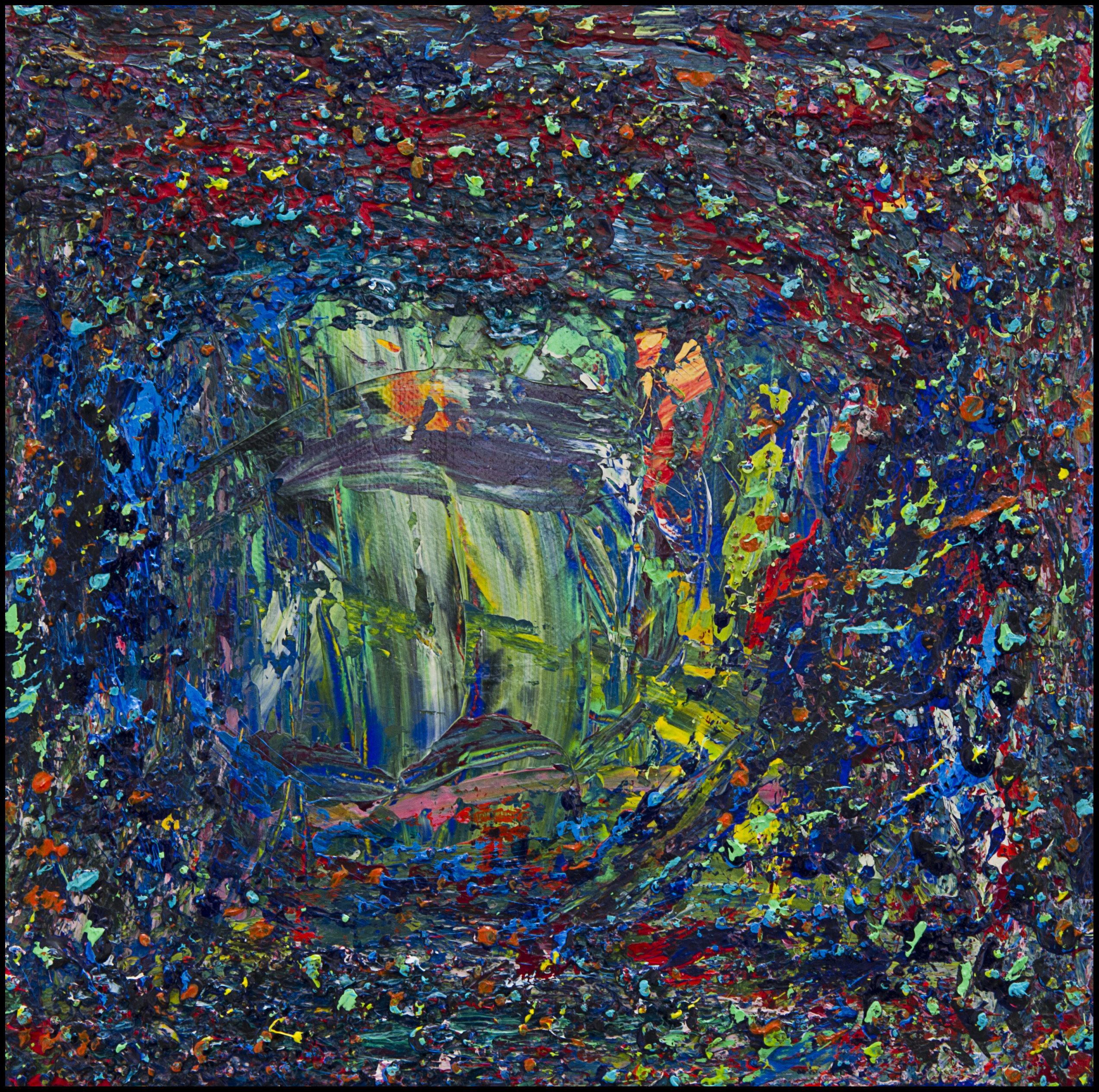
Green Passage by Stephen Hough
Hough’s string quartet, an imaginary encounter with the group of French composers known as ‘Les Six’ (Auric, Durey, Honegger, Milhaud, Poulenc and Tailleferre ) is bursting with musical colour and captures the rather riotous happy-go-lucky atmosphere of Paris in the 1920s.
This string quartet was commissioned by the Takacs Quartet to partner Ravel’s String Quartet in a programme of French music that they planned. Maurice Ravel was also a member of a group of painters, composers and writers that existed between 1903 and the catastrophe of the First World War. Known as Les Apaches, the group proudly used this name when they were shouted at for expressing enthusiasm for Debussy’s opera Pelléas and Mélisande. (Debussy’s groundbreaking music was not universally approved of.) “Les Apaches” was a term of abuse; notorious underworld gangs in Paris in the late 1800s were known as Les Apaches – hooligans, basically.
Ravel’s Les Apaches was an exciting artistic melting pot of forward-looking talent. This photograph shows several members of the group at a gathering in the garden of the composer Florent Schmitt.
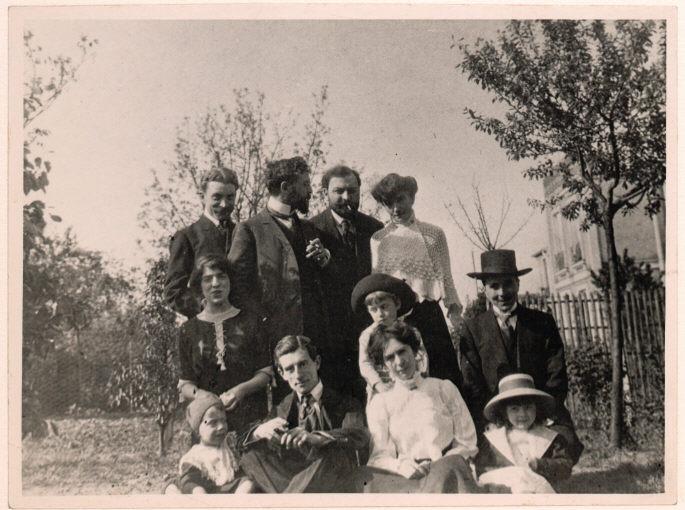
Some members of Les Apaches in the garden of Florent and Jeanne Schmitt circa 1910. Ravel is the man front left. In fact, Les Apaches was exclusively all-male, so this picture was taken at what was clearly a wider social gathering.
Another significant member of Les Apaches was the painter Édouard Bénédictus, who was also a chemist and designed, of all things, the prototype formula for safety glass. (They were certainly a visionary lot, those Apaches.) It is possible to see echoes of William Morris and Cézanne’s germinal cubism in the prismatic designs of Bénédictus – Cézanne was a key artistic figure for Les Apaches – and there is an affinity too with the modernist architecture of the period. This puts a different slant on the general understanding that composers such as Debussy and Ravel were writing the musical equivalent of impressionist painting.
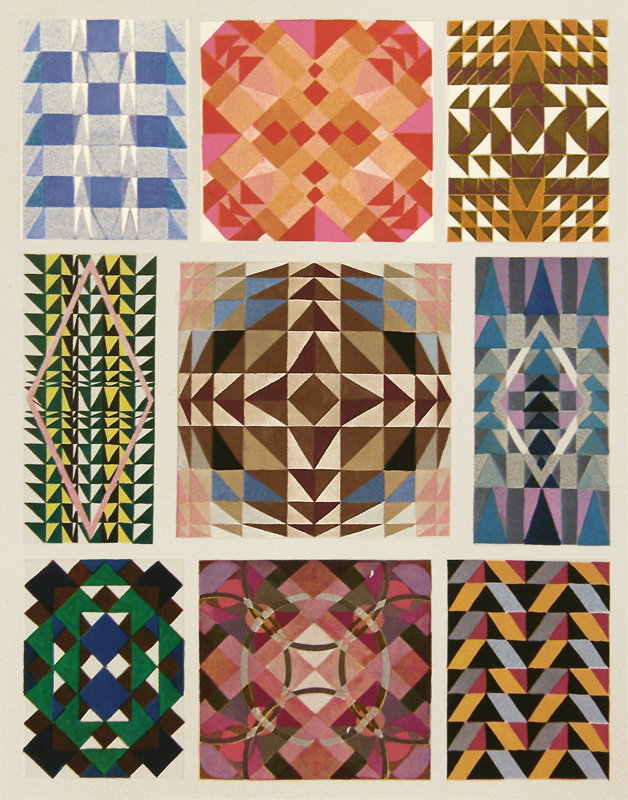
from Nouvelles Variations by Édouard Bénédictus
Ravel dedicated his quartet to Gabriel Fauré, his teacher. Fauré was a hugely influential figure in the Parisian musical scene at the turn of the 19th to 20th century, a time of great upheaval politically and socially, which was reflected in the arts. Fauré was supportive of his protégé and it is clear that Ravel was greatly influenced by him, particularly in his sophisticated use of harmony and texture.
Ravel and his contemporaries were fascinated by earlier musical forms, particularly baroque dance forms. It is said that Ravel studied Haydn’s string quartets with the aim of understanding more about how to use the different colours of instruments in his compositions. It is easy to see why. Haydn achieves the most subtle gradations of colour and texture with minimal means but to maximum emotional affect. In some ways his music is almost too refined for the modern ear; we only take notice of music that slams into us and demands to be consumed. Haydn paints with the utmost clarity, subtlety and emotional sensitivity, often leading us to… nowhere, or at least to the edge of the abyss, into uncertainty. Modern purveyors of consumerism wouldn’t dare to take you to the edge because when you got there, you would find it full to the brim with their distractions, soundbites, gadgets and other debris. and you would see it for the illusion that it is. The abyss of uncertainty, possibility and creativity would be obscured by stuff.
I am reminded of walking on Dartmoor and coming across huge vistas of wilderness; brutal, elemental expanses of seemingly featureless moorland. In a moment I might be subsumed by it, becoming one with it – along with those unfortunate young soldiers who over the years must surely have lost their way in it during their training, never to be seen again.
I think that is where Haydn takes us, but with his friendly hand to hold ours – and therein lies a paradox. He is not afraid to enter the wilderness, and we all have our experience of bleakness, but so often there is wit and fun along the way. Haydn’s music is immensely rewarding to play, for those reasons. I hope that you feel persuaded to come along and experience all the different musical colours of this programme with us.
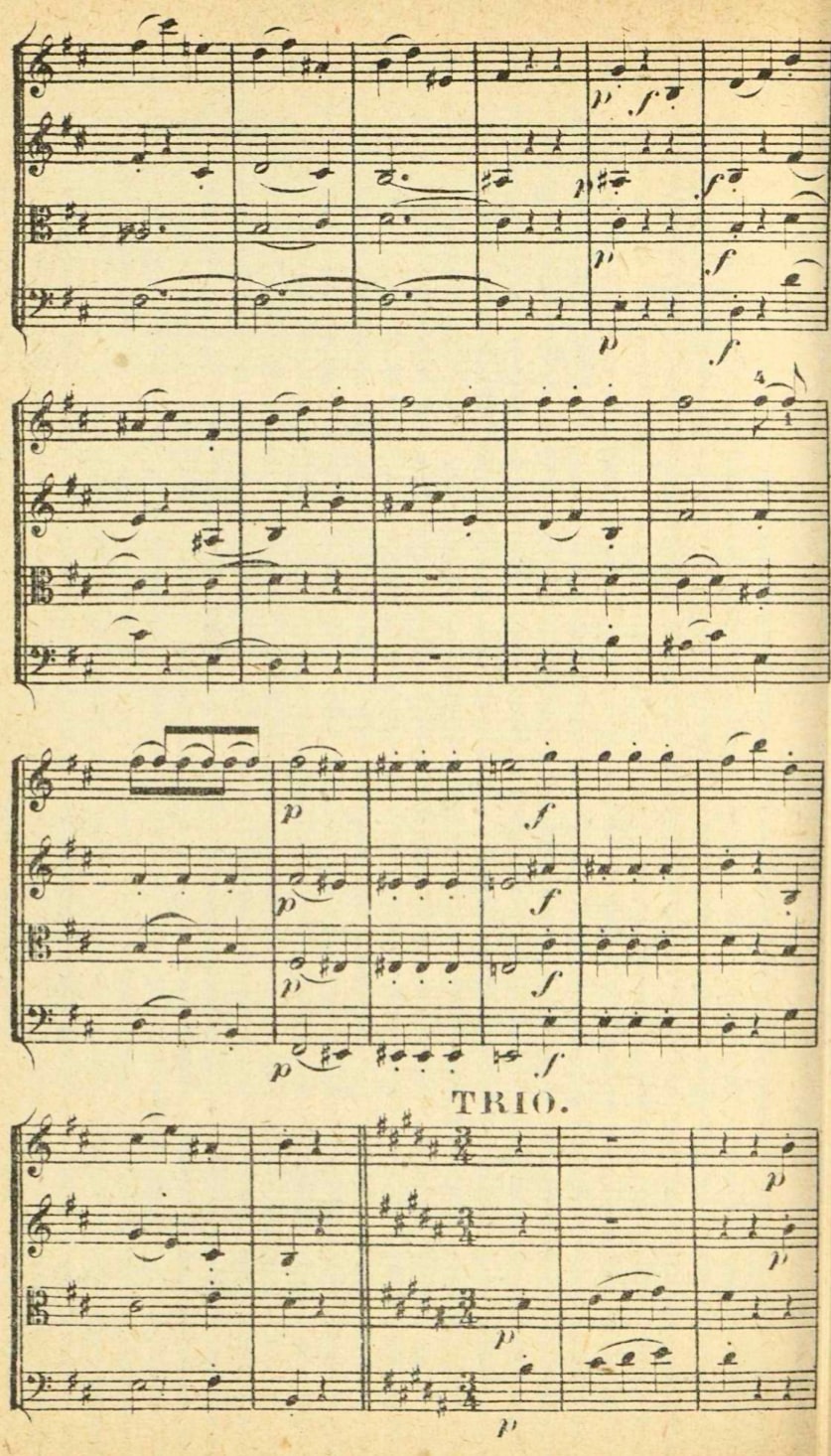
As a postscript and teaser, below is an excerpt from Haydn’s Scherzo and Trio from op 33 no 1. His scores always look very clean, ordered and relatively simple but what is actually going on in the music is eventful, to say the least – and too numerous to go into here without critics recommending that the author is given a good hiding. Suffice to say that what Haydn does here is pretty cheeky, and funny for the musicians – in the Trio section he basically provides music that is an opportunity for B major scale practice, in a work that is primarily in B minor!
The cause of a smile
The beginning of Yesterday Once More by The Carpenters. What could possibly link this timeless 1970s song to Purcell’s timeless anthem Rejoice in the Lord alway, written almost three hundred years earlier?
When we focus on the downward travelling bass line in both, it soon becomes apparent.
Carpenters:

Purcell:
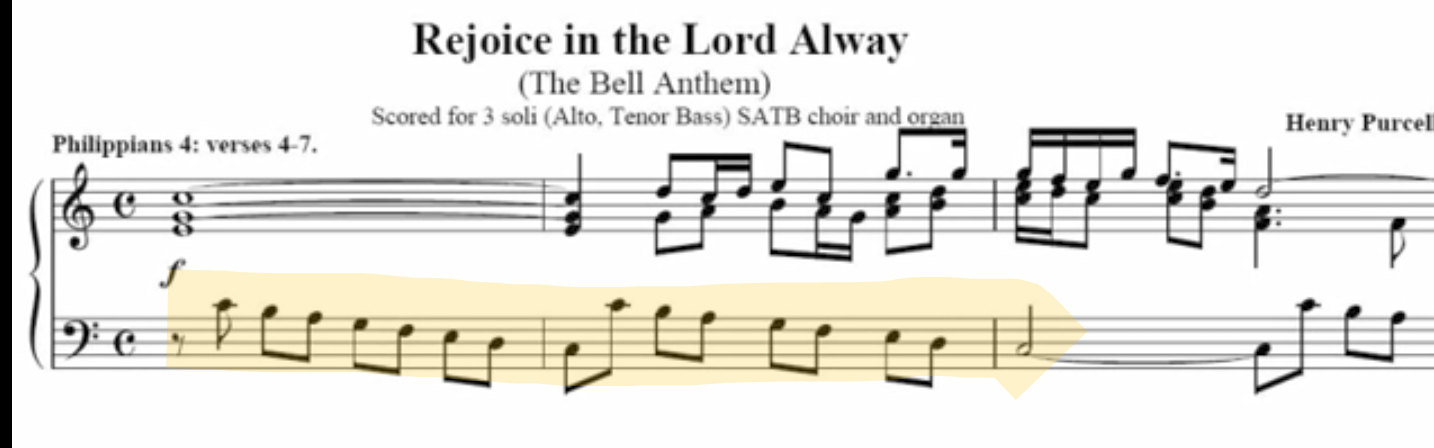
– music written hundreds of miles and years apart but sharing the common musical device of the descending motif, giving the music a sense of direction and harmonic progression. (The Carpenters’ For All We Know is very similar at the beginning.) In a DSQ programme that contains three works by English composers and one by Mozart, it is clear that there are many connections. Within the music there is evidence of the universality of origins and influences.
There are several more descending lines integral to the works that we are playing.
1.Britten

2. Mozart
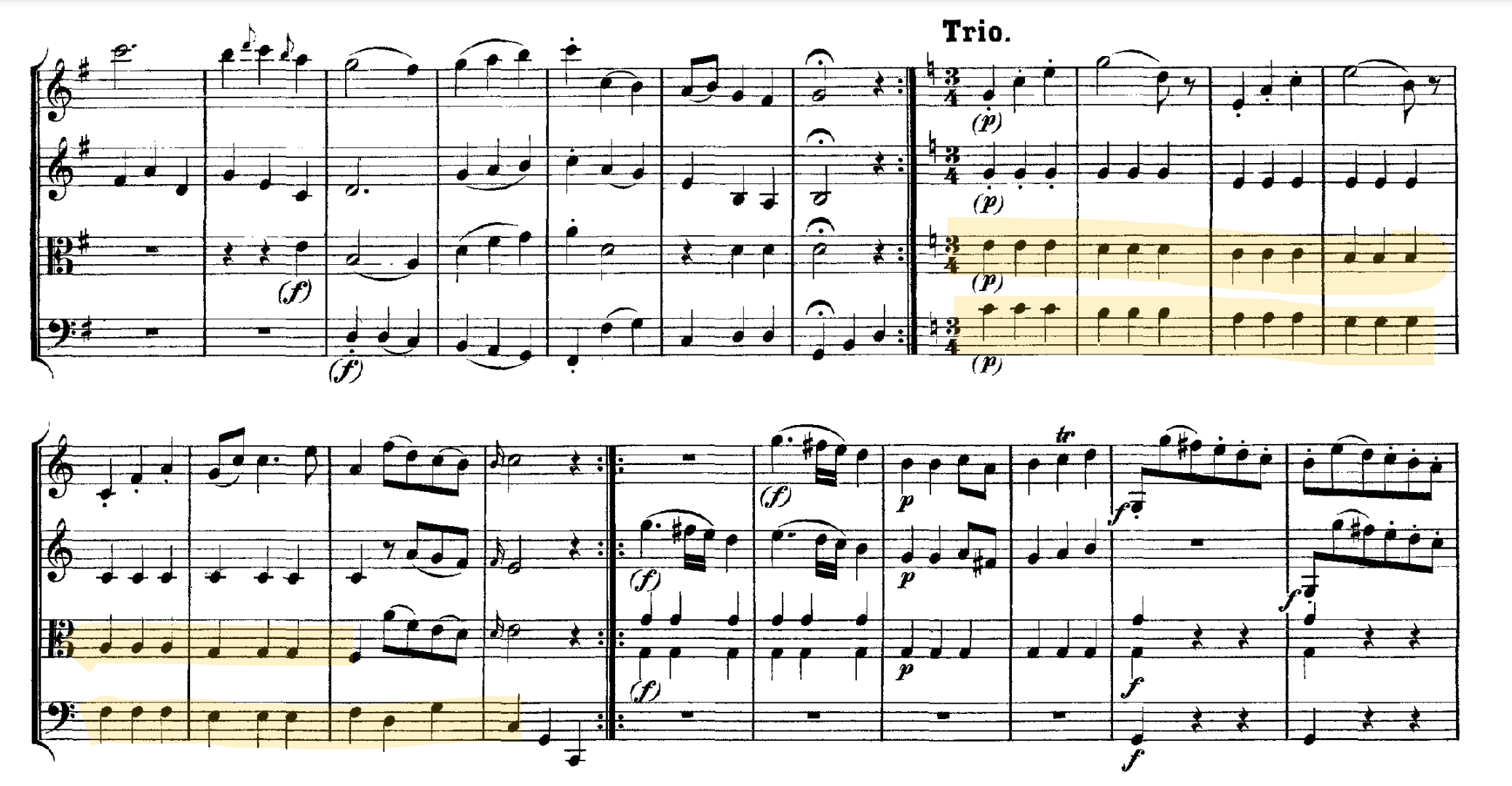
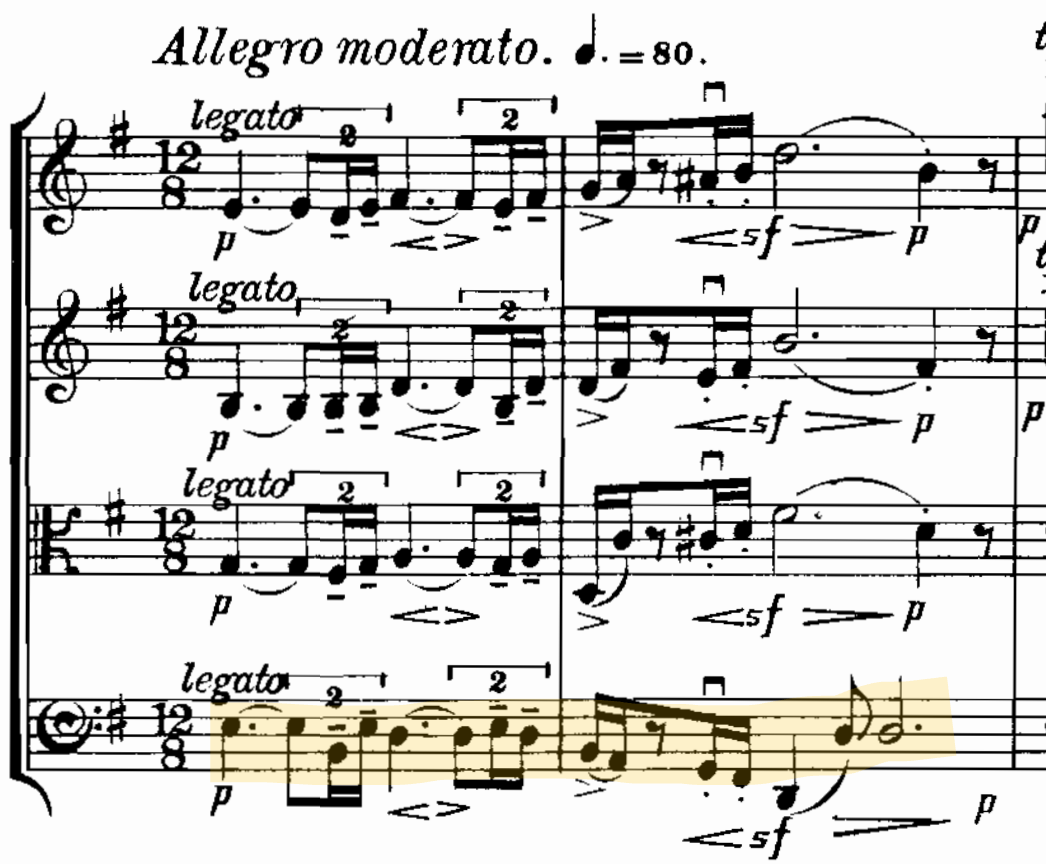
Sometimes these descending lines give a strong sense of where the bass line is heading. At other times, it isn’t so obvious. In the beginning of the Elgar quartet, the cello (bass) line wanders down while the first violin heads upwards, in a way not dissimilar to the Mozart example above.
3. Elgar (beginning)
Later in the first movement the downward line is more thematic:
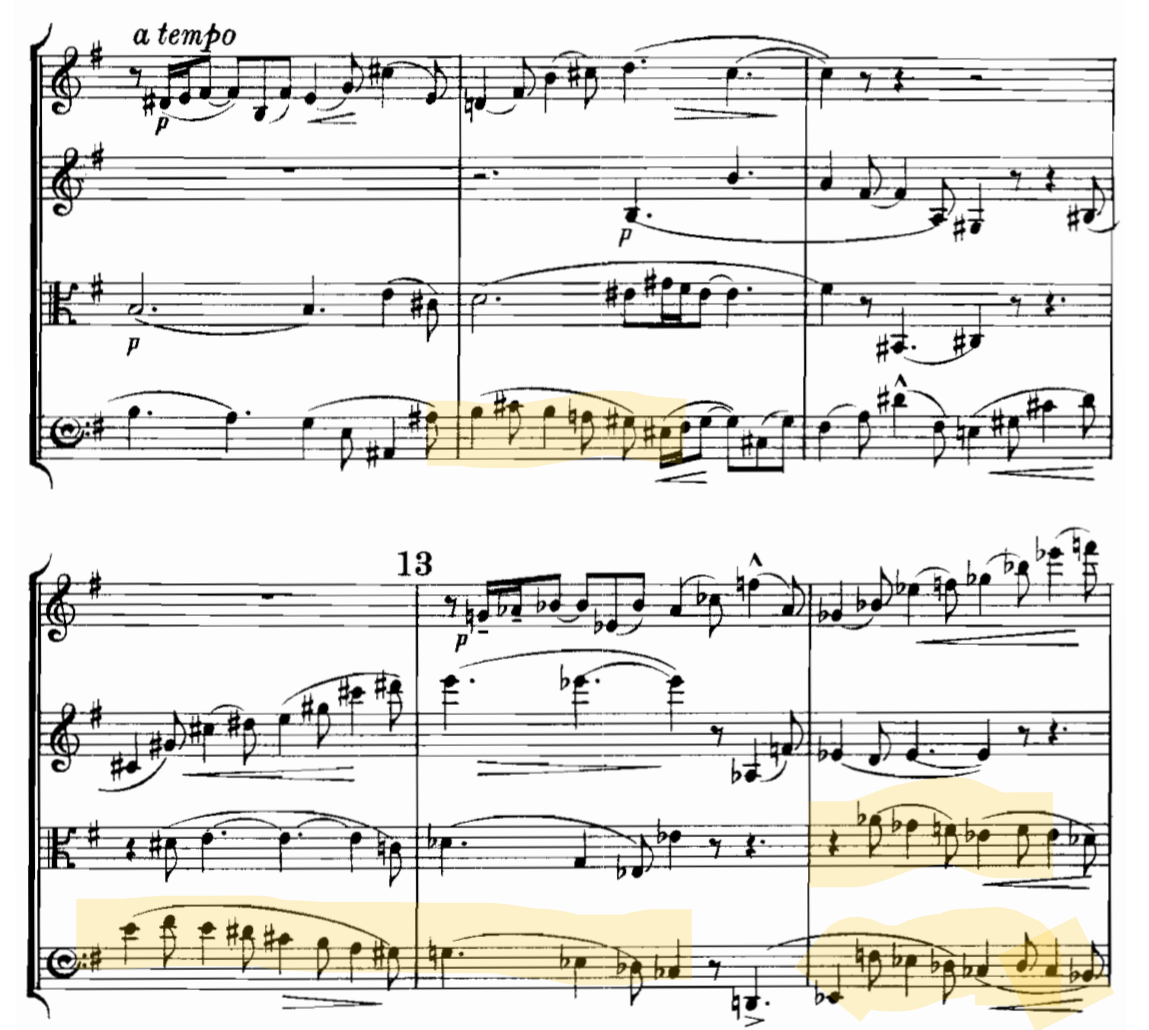
4. Purcell
Purcell’s downward lines roll out in profusion.
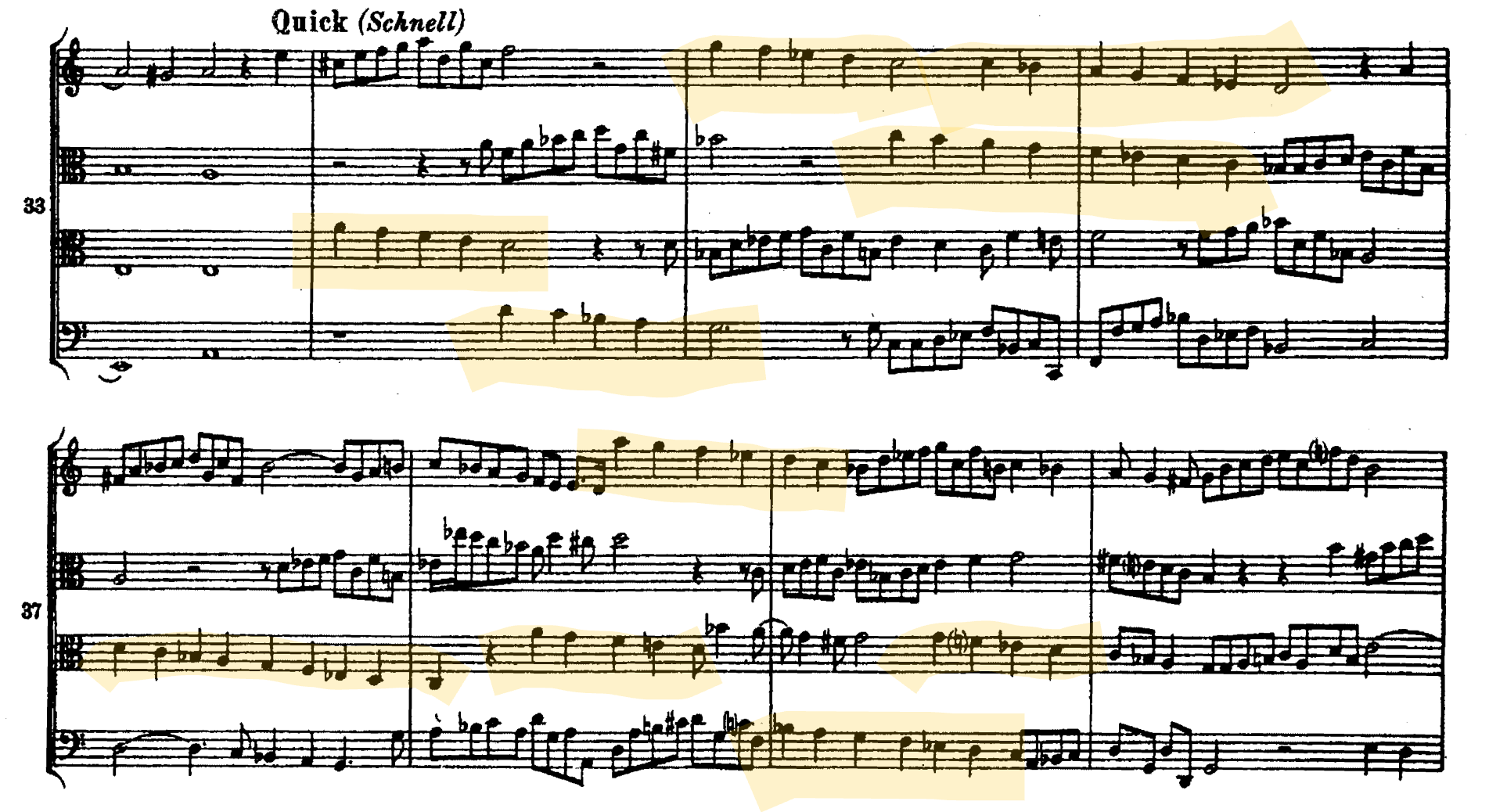
In some ways, Purcell’s music sounds more modern than any of the other more recent composers featured in our programme. Elgar definitely wanders off into new territory, for him at least. There are echoes of Wagner and Debussy but somehow it is quintessentially Elgar. It feels appropriate to play Elgar immediately after Purcell – they are surely questing, kindred spirits spanning the centuries.
In the videos I describe some of the descending lines as like a tolling bell. Purcell’s anthem, Rejoice in the Lord alway is also called the ‘Bell anthem’ because of the downward bell-like movement of the bass line – so much more than a bass line! I studied this anthem in my early teens and it really affected me way back then. The Carpenters also had their place in my listening of that time. I wasn’t aware of the link between the two but perhaps it takes time to become aware of the universality of things.
When I was young I’d listen to the radio
Waitin’ for my fav’rite songs
When they played I’d sing along
It made me smile
(Richard Lynn Carpenter and John Bettis)
Time for the opera interval
Oh to have heard Teresa Stolz sing!

Teresa Stolz, soprano and Cluedo impersonator
Giuseppe Verdi, in his sixtieth year, was in Naples assisting in the production of his latest opera, Aida, when the lead soprano, Teresa Stolz became ill and everything was put on hold. Stolz (forty-one at the time) was his soprano of choice. (She performed the soprano solo in the first performance of his Requiem the following year – 1874.) His wife, Giuseppina Strepponi, had been a celebrated soprano too, but had retired. His first wife, Margherita Barezzi, had also been a singer.
Surely the voices of the women that he knew and his relationships with them fed his musical imagination. The same could be said of Mozart, for sure, and many other composers. It is as if there is something of these women (and men of course) embedded, almost recorded, in the music. Could this be, in a way, a hugely respectful and fond way of appreciating and celebrating them that lasts forever? A debatable subject, for sure, especially bearing in mind their varying roles and reputations in the drama, but something worth debating, perhaps.

Albergo delle Crocelle, on the right. (No longer in existence.)
Holed up in his hotel, the Grande Albergo delle Crocelle (favourite haunt of, amongst others, Casanova some time back), a beautiful spot by the sea, fifteen minutes walk from the theatre, Verdi must have been aware that there were some string players in the theatre orchestra with time on their hands and he proceeded to pen a large scale work for string quartet which had its first performance in the hotel. He was modest about its qualities but it is in reality an astonishingly assured and brilliant work, infused with operatic drama and ‘singing’ melodies.

Real Teatro di San Carlo, Naples. (Neapolitan School, 19th century)
Verdi was very involved in modernising opera theatre orchestras, or at least attempting to persuade theatre managers to change things. Opera orchestras had become, basically, large wind bands, and he pushed for more strings, particularly lower strings, to achieve a richer string sound that balanced with the wind instruments better. He (along with other forward thinking composers and academics) also insisted on changes in the layout of the orchestra because many opera houses had become stuck in eighteenth century layouts that didn’t reflect what was happening in operatic writing as it developed through the nineteenth century. He also requested a standard pitch of A = 435, which is a little lower than what is considered standard pitch today. His string quartet is an indicator of the standard of string writing and playing that he was trying to achieve. It is superb – and demanding – string writing, so clearly straight out of the opera.
Teresa was to remain a part of Giuseppe’s life to the end. After his wife died, Teresa went to live with him until his death. The exact nature of their relationship is not known. The story of their lives and loves could very easily be turned into an opera.

Group portrait with Verdi in the middle and Stolz standing on the left. Taken 1900.
We are also playing a short piece for strings – Crisantemi – by Giacomo Puccini. Primarily an operatic composer, and one of the greatest composers ever working in that genre, he was moved to write this elegiac piece in a single night in January 1890, on hearing that his forty-four year old friend, the Duke of Aosta, had died of pneumonia.
Prince Amedeo had fought in the Third Italian War of Independence and was something of a national hero, having been wounded in the Battle of Custoza.

Prince Amedeo, Duke of Aosta and sometime King of Spain
Clearly intended to show off his considerable assets, this portrait may have contributed, in an extraordinary turn of events, to him being chosen to be King of Spain from 1870 – 1873.

Amedeo with his first wife Maria Vittorio – and child
Having been installed as king, it turned out that the level of political turmoil in Spain at the time made his position unworkable and he decided to leave and head back to Italy. Still seen as a hero in Italy, his return was greatly celebrated. After his wife’s death, his second marriage was frowned upon by many, but his death, especially at a relatively young age, was a cause for national mourning. Puccini’s Crisantemi is tragic, tender and heartfelt, devoid of pomp or bombast. (It is believed that Madame Chrysanthème, a novel – published 1887 – by Pierre Lotti, about a young French naval officer who enters into a temporary marriage with a geisha while stationed in Japan, was partly the inspiration for Puccini’s Opera Madama Butterfly. The connection between Madame Chrysanthème and Crisantemi is potentially a very interesting subject, so far strangely unexplored and it is likely that it will remain that way unless a particularly inquisitive student reads this blog post and thinks that such a study would make a good subject for a degree.)

The funeral of Amedeo Duke of Aosta. 1890.
Amedeo’s life, and indeed the lives of those close to him, would also potentially make for for good operatic – or film material. We are available, as a quartet, to be part of the production – period costumes and all – and we would be happy to negotiate a fee for our services proportionate to the predictable huge success of the venture.
Rota’s eternal dilemma

Nino Rota
The music of Nino Rota (b. 1911 d. 1979) may not be a familiar name to concert audiences but such iconic films as The Godfather and La Dolce Vita will surely be well known to many. Rota wrote the soundtrack for these Federico Fellini directed films, as well as many other films such as Zeffirelli’s Romeo and Juliet. He is a hugely significant figure in the history of film making. In particular, he helped Italian film develop its unique character. Fellini called him his ‘most precious collaborator. He had a geometric imagination, a musical approach worthy of celestial spheres. He thus had no need to see images from my movies. I clearly realised he was not concerned with images at all. His world was inner, inside himself, and reality had no way to enter it.’
Rota was a prolific composer in other musical forms too – ballet, opera, concertos and chamber music. His Quartetto per archi (Quartet for strings) was written just after the Second World War, in the same period that he was writing his first film scores. There is definitely something rather atmospheric and filmic about this section in the last movement:
Perhaps it is possible to hear a reference to ceremonial courtly early music in the louder, livelier section here. As a student Rota had written a thesis on the Venetian Renaissance composer and music theorist, Gioseffo Zarlino.

Frontispiece of Zarlino’s Le Istitutioni Harmoniche, plus a page of text, published 1558
There is something of the celestial spheres suggested in the illustrations of Zarlino’s groundbreaking treatise, Le Institutioni Harmoniche, which must have appealed to Rota. (Zarlino was an exact Venetian contemporary of the painter Tintoretto, whose St Ursula painting is mentioned in the previous blog post here. Surely they must have known each other.)

Illustrations in Zarlino’s treatise
Whilst Rota was at the forefront of the new wave of post war culture, his fascination with the golden age of Italian music inevitably found its way into his compositional style, as can be heard in this transition in the slow movement:
“When I’m creating at the piano, I tend to feel happy” said Rota – “but the eternal dilemma – how can we be happy amid the unhappiness of others? I’d do everything I could to give everyone a moment of happiness. That’s what’s at the heart of my music.” Tantamount to an artistic manifesto, this says much about him as a person and there is no doubt that he was successful in achieving what he set out to do.
From Mendicanti to cognoscenti
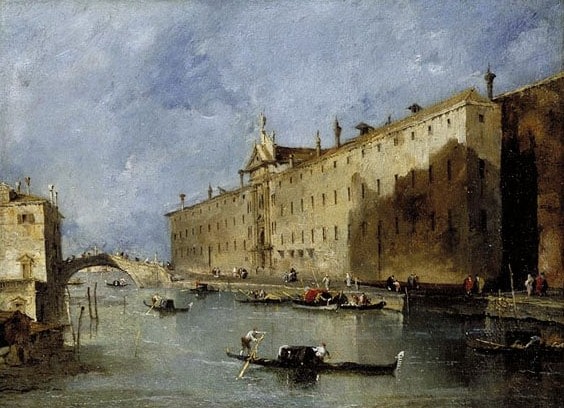
The Rio dei Mendicanti (Ospedale on the right) by Francesco Guardi c. 1780-90, courtesy York Museums and Gallery Trust
Our Italian programme begins with the music of a courageous and determined eighteenth century woman. Maddalena Lombardini’s impoverished parents took her to audition for a place at the Ospedale di San Lazzaro dei Mendicanti, one of Venice’s charitable institutions for the poor, sick and orphaned, which also served as educational establishments. In particular, musical skills were nurtured, presumably with the expectation of the pupils’ involvement in the music in the chapel there. She was accepted.
Lombardini was clearly a talented young musician and managed to get permission to have violin lessons with Tartini, violinist and musical theorist, who lived in Padua. She studied composition with Ferdinando Bertoni, choirmaster at the Ospedale.
Her sights were soon set beyond the walls of the Ospedale. In order to be released from its confines she needed a dowry. She married another violinist composer, Lodovico Sirmen, and they left to tour Europe.

Maddalena Laura Lombardini Sirmen b. 1745 d. 1818 Artist unknown.
They performed to acclaim in Turin, Paris and London, often playing their own compositions – concertos, duets, and no doubt quartets. A set of six quartets (we are playing No 6) published in Paris in 1769 was considered to have been co-written by the couple but more recently the authorship has been more clearly identified as being that of Maddalena herself. On the cusp of the early classical style that was being developed by Haydn, and contemporary with his earliest string quartets, there is still a flavour in her music of the courtly airs and graces that she would have encountered on her visits to the cultural capitals of Europe.
Despite the early flowering of her talent and fame, she ultimately got rather left behind. Her violin playing became to be seen as old fashioned. She turned to singing as a career, even performing as far away as St Petersburg but this new musical direction didn’t really work out and she subsequently returned to Venice with her travelling companion, Giuseppe Terzi, a priest – this arrangement was evidently not uncommon at the time. (Her husband Lodovico had long since left her, taking their daughter Alessandra to Ravenna, where he had employment and became associated with Countess Zerletti.) In 1795 Maddalena and Giuseppe jointly adopted a child. The couple must have been close, to say the least. One wonders what Maddalena’s inner life was, balancing her musical aspirations, cosmopolitan experiences and maternal feelings.
It is very likely that the young Maddalena gazed at Tintoretto’s painting, St Ursula and the Eleven Thousand Virgins, which was installed in the chapel at the Ospedale. It is a very dramatic picture, depicting a scene from the life of the patron saint of schoolgirls, St Ursula, that could almost be the inspiration for a film scene. In particular, the eye is drawn to the huge ships in the background and of course that extraordinary weightless figure flying through the air. There is so much movement in it, so much travelling.

St Ursula and the Eleven Thousand Virgins by Jacopo Tintoretto c. 1550
I think it would be a stretch of the imagination to interpret this painting as in any way feminist but perhaps there is an energy in it that is reflected in the impetus of Maddalena’s desire to break out of the Ospedale, travel far and wide and express her feelings through her music.
A sorceress, a magician and a dog
The sorceress Armida was the subject of Joseph Haydn’s 1784 opera, one of his favourite works.
The tale of Armida falling in love with the sleeping crusader Rinaldo at the point of killing him, and transporting him to her enchanted garden seems to have sparked the imagination of a number of composers, artists and writers.
Rinaldo and Armida. Nicholas Poussin c.1630 (courtesy Dulwich Picture Gallery)
The themes of conflicting thoughts and interests, allegiance (political and spiritual), the consequences of love, as well as the metaphysical elements in the story, provided much scope for somebody like Haydn to have a field day of creative inspiration.
The overture to Armida summarises the course of this drama in a perfectly succinct form. It is sometimes called Sinfonia rather than Overture. It is. in a way, a miniature symphony, the brevity of which Haydn would have had a little chuckle of approval over.

Delphine von Schauroth aged 9, c. 1823 by Langlumé
Delphine von Schauroth is a forgotten star in the firmament of celebrated pianists. She was a close friend of Felix Mendelssohn and by all accounts his muse at the time that he wrote his first piano concerto (1830) – he dedicated the concerto to her. A child prodigy who had toured Europe, her playing deeply affected those who heard her. For instance, one listener wrote: ‘I believe that the philosopher who asserted that the soul resides in the fingertips was either a money changer or he heard Miss von Schauroth play the piano! I speak not at all of the tremendous, almost incomprehensible skill, but only about the characteristic charm of the tenderness and interiority with which she knows how to give rise to the deepest, most secret spirits of the enchanted strings, so that they speak to her and unfold their secretly prevailing powers. As I was leaving, someone was so simple-minded as to ask of me: “How did you like Schauroth?” He could just as well have asked: “How did you like the dawn?” I merely said: “I just saw with my own ears the Graces dance the Iliad on the piano.”’
Her playing came across as somehow magical and enchanted, especially when she improvised, which she did a lot. (Mendelssohn was also a celebrated improviser and all-round brilliant pianist.) It is no coincidence that the epigraph to the above portrait, from Tasso’s Gerusalemme conquistata, is part of a description of the music in the garden of Armida, translated as ‘The others fell silent to listen intently / And the winds stopped the whispers in the air.’
Mendelssohn was the soloist at the first performance of his sparkling first piano concerto in Munich’s Odeon Hall in 1831.
This was, for sure, a large hall (sadly mostly destroyed in the second world war.) Bearing in mind that the pianos and orchestral instruments of that period would have sounded quite different to today’s instruments (arguably more delicately nuanced), the audiences would have needed to listen acutely in such a hall. No doubt they were rewarded with the brilliant and subtle artistry of Mendelssohn and the other performers.
Forty-five years earlier, Wolfgang Amadè(also known as Amadeus) Mozart, was in Prague having travelled there from Vienna with his wife, Constanze, some fellow musicians including the clarinetist Anton Stadler, a servant, and even his dog, all (except the dog presumably) playing word games in the coach.
The Estates Theatre, Prague. (photo: Andrew Gillett)
It is a wonder that the historic Estates Theatre is still standing and active as an opera and concert venue. It is easy to imagine what it was like when Mozart and his entourage were there, busying around preparing for the first performance of Don Giovanni or rehearsing for the premiere of his clarinet concerto.
At a concert there, on January 19th (1787), Mozart’s 38th symphony, written specifically with the Prague musicians in mind (particularly their outstanding wind players), was given its first performance. After the concert, Mozart stayed on stage, improvising on the fortepiano (an even quieter instrument than the piano that Mendelssohn would play on) for half an hour. The audience was mesmerised. Mozart’s early biographer, Franz Niemetschek wrote: ‘The theatre had never been so full as on this occasion; never had there been such unanimous enthusiasm as that awakened by his heavenly playing. We did not, in fact, know what to admire most, whether the extraordinary compositions or his extraordinary playing; together they made such an overwhelming impression on us that we felt we had been bewitched.’
It is almost as if they were transported to Armida’s enchanted garden by Mozart’s music and his playing.
Prague helped provide the means and inspiration for several of Mozart’s last supreme musical achievements; works that continue to astound and marvel with their infusion of humanity, empathy and originality.
